
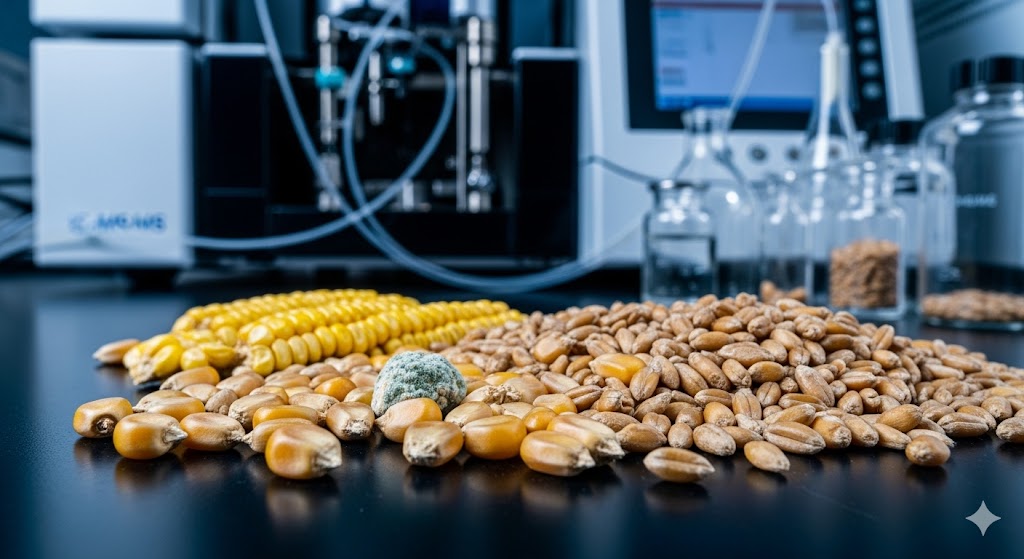
How is climate change altering the map for mycotoxins?
Climate change is altering mycotoxin maps by creating warmer, wetter, and more volatile weather patterns that allow dangerous molds to thrive in new geographic regions. Crops that historically never required rigorous testing are now experiencing unprecedented contamination spikes.
Agricultural producers and grain processors can no longer rely on historical weather data to predict harvest safety. This unpredictable climate volatility makes proactive mycotoxin screening services an essential, ongoing operational requirement rather than a simple seasonal checkbox.
Bronte Ushaglyan, Food Scientist and President of United Food Labs, explains how this environmental shift is forcing the industry to adapt:

“Climate change is creating warmer, wetter, and much more variable growing conditions, which is essentially putting mold growth and mycotoxin production into overdrive. Those traditional, predictable testing schedules just don’t cut it anymore—they simply won’t catch these sudden spikes in contamination. Labs and producers have to pivot to much more frequent, targeted testing because crops are now being exposed to new mold species in regions that were previously completely unaffected.”
Why are historically “safe” agricultural regions suddenly at risk?
Historically safe regions are suddenly at risk because extreme weather events, like prolonged droughts, severely weaken crops and strip away their natural immune defenses. Once a crop is stressed by extreme heat or lack of water, invading fungi can easily take hold and produce toxic byproducts.
This means a geographic area known for producing pristine, export-grade grain for decades can unexpectedly yield a highly toxic harvest. Risk managers must now treat every harvest as a potential biohazard, regardless of its zip code.
Ushaglyan points to a prime example of this geographic shift:
“Take the Midwestern United States, for example. It was historically considered very low-risk for aflatoxin, but recently we’ve seen sporadic outbreaks in corn during unusually hot and dry summers. When you have that extreme weather stress, it weakens the crops and makes them highly susceptible to Aspergillus flavus, the mold that actually produces aflatoxin. It just goes to show that regions we once considered totally safe are now at real risk because of shifting weather patterns, forcing growers to ramp up their testing.”
What are the most common mycotoxins tested by a mycotoxin testing lab?
A mycotoxin testing lab primarily screens for highly toxic fungal byproducts that bioaccumulate in staple crops, including Aflatoxins, Deoxynivalenol (DON), and Fumonisins. Accurately quantifying these compounds requires advanced liquid chromatography (LC-MS/MS) techniques to ensure precise detection at trace levels.
Because mycotoxins are highly stable compounds, they survive the high heat of cooking, baking, and extrusion. The only way to ensure consumer and livestock safety is to intercept the contaminated grain before it enters the processing facility.
| Mycotoxin | Primary Crop Risk | Health Impact |
|---|---|---|
| Aflatoxin | Corn, Peanuts, Tree Nuts | Highly carcinogenic; causes severe, acute liver damage. |
| Deoxynivalenol (DON) | Wheat, Barley, Oats | Known as “Vomitoxin”; causes acute gastrointestinal illness. |
| Fumonisin | Corn and Corn byproducts | Triggers severe neurological diseases in livestock, particularly horses. |
What is the final checklist for climate change food safety testing?
To ensure robust climate change food safety, grain processors and risk managers must proactively update their sampling and testing protocols to account for new environmental variables. Standard composite sampling must be expanded to catch hidden “hot spots” of mold in massive grain silos.
- [ ] Geographic Risk Mapping: Have you updated your risk assessments to account for recent weather extremes (droughts or floods) in your sourcing regions?
- [ ] Targeted Sampling: Are you taking larger, more frequent composite samples to account for uneven mold distribution in grain silos?
- [ ] Comprehensive Screening: Is your contract lab utilizing LC-MS/MS to screen for multiple emerging mycotoxins simultaneously?
- [ ] Aflatoxin Analysis: Have you mandated rigorous aflatoxin analysis for corn and nut crops coming from newly drought-stricken areas?
The agricultural map is being redrawn by the climate. Validate your harvest and protect your supply chain with rigorous chemical analysis.
Do you need to verify your crops are free of emerging mold toxins? Visit Contract Laboratory to find a qualified mycotoxin testing lab, or Submit a Testing Request to get competitive quotes for your mycotoxin screening services today.