
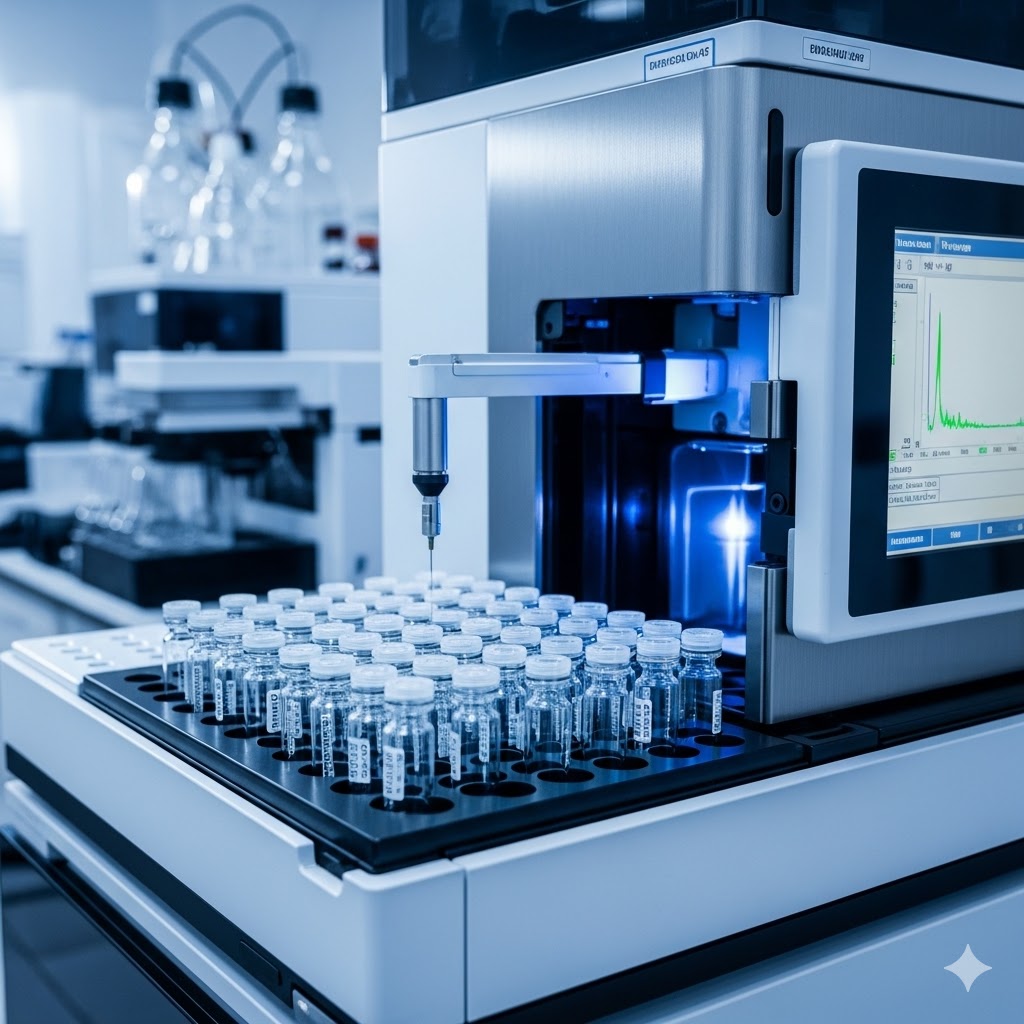
The precise determination of cocaine purity is a critical requirement across forensic science, clinical toxicology, and pharmaceutical quality control. For professionals requiring exact quantitative data, understanding the methodologies and challenges involved in cocaine purity testing is essential.
Contract laboratories tasked with this highly regulated analysis must navigate complex sample matrices, a constantly evolving landscape of adulterants, and stringent regulatory requirements. This comprehensive guide explores the primary laboratory methods utilized for quantitative cocaine analysis, the reasons driving these testing requirements, and how specialized labs overcome distinct analytical challenges.
Why is Cocaine Purity Testing Essential?
In a professional laboratory setting, quantifying the exact concentration of active cocaine (benzoylmethylecgonine) in a given sample serves several critical functions:
1. Forensic and Legal Evidence Processing
Law enforcement agencies and the judicial system rely heavily on accurate quantitative analysis. In many jurisdictions, prosecuting drug offenses and determining sentencing guidelines are directly tied to the absolute weight of the pure active substance, rather than the gross weight of the seized material. Precise cocaine purity testing ensures legal proceedings are based on scientifically defensible data.
2. Clinical and Post-Mortem Toxicology
Understanding the precise concentration of a substance is vital for forensic pathologists in determining the cause of death. Furthermore, clinical toxicologists and public health officials monitor purity and adulterant profiles to track overdose outbreaks linked to highly concentrated batches or toxic cutting agents (such as fentanyl or levamisole).
3. Pharmaceutical Quality Control
Cocaine hydrochloride remains a Schedule II controlled substance with legitimate medical applications, primarily as a topical anesthetic for mucous membranes in otolaryngology. Contract laboratories testing pharmaceutical-grade cocaine must rigorously verify purity to ensure patient safety, product efficacy, and strict compliance with pharmacopeial standards (e.g., USP/EP monographs).
Advanced Analytical Methods for Cocaine Purity Analysis
Professional contract laboratories rely on a suite of validated instrumental techniques to isolate, identify, and quantify cocaine in the presence of complex diluents. The three primary methods include:
Gas Chromatography-Mass Spectrometry (GC-MS)
GC-MS is widely considered the gold standard for the identification and quantification of illicit drugs.
- How it works: The gas chromatograph separates the volatile components of the sample matrix, while the mass spectrometer provides a highly specific spectral “fingerprint” for each eluting compound.
- Lab Advantages: It is highly effective for separating cocaine from common volatile adulterants.
- Analytical Considerations: Samples may require derivatization to improve the thermal stability and peak shape of specific degradation products, such as ecgonine methyl ester. Analysts must carefully optimize injection port temperatures to prevent the thermal degradation of cocaine prior to column entry.
High-Performance Liquid Chromatography (HPLC)
HPLC, particularly when coupled with Diode Array Detection (HPLC-DAD) or Mass Spectrometry (LC-MS/MS), is heavily utilized for robust quantitative purity testing.
- How it works: Liquid chromatography separates compounds dissolved in a liquid mobile phase based on their interaction with a solid stationary phase.
- Lab Advantages: HPLC is ideal for thermolabile (heat-sensitive) compounds that might degrade in a GC-MS system. It provides exceptional quantitative precision and allows for the simultaneous analysis of cocaine and its common cutting agents without prior derivatization.
- Analytical Considerations: Successful HPLC analysis requires expert method development, specifically in selecting the correct mobile and stationary phases to ensure baseline resolution between the active pharmaceutical ingredient (API) and structurally similar adulterants.
Fourier-Transform Infrared Spectroscopy (FTIR)
While more commonly deployed for rapid qualitative identification, Attenuated Total Reflectance (ATR) FTIR can be utilized for semi-quantitative or quantitative purity assessments in controlled scenarios.
- How it works: FTIR measures the absorption of infrared light by the sample, generating a spectrum based on molecular vibrations.
- Lab Advantages: It provides rapid, non-destructive screening and is highly effective at distinguishing between the freebase form of cocaine (“crack”) and the hydrochloride salt form.
- Analytical Considerations: Extracting quantitative data from the overlapping spectral bands of complex street-level mixtures typically requires advanced chemometric modeling, such as Partial Least Squares (PLS) regression.
Overcoming Analytical Challenges: Adulterants and Diluents
The primary hurdle in testing illicit or unknown cocaine samples is the “matrix effect.” This is caused by the intentional addition of diluents (inactive bulking agents) and adulterants (active compounds added to mimic or enhance physiological effects).
A certified contract laboratory must be equipped to handle the following analytical challenges:
| Challenge Category | Common Examples | Impact on Laboratory Analysis |
|---|---|---|
| Active Adulterants | Levamisole, Phenacetin, Lidocaine, Benzocaine, Diltiazem | These share structural or physical similarities with cocaine, potentially co-eluting in chromatography or causing ion suppression in LC-MS/MS. Levamisole is highly prevalent and requires robust method validation for precise separation. |
| Inactive Diluents | Lactose, Mannitol, Inositol, Talc, Baking Soda | While biologically inactive, bulk diluents can foul analytical instrumentation, degrade GC column lifetimes, or precipitate in LC mobile phases. This necessitates thorough sample preparation like Solid-Phase Extraction (SPE). |
| Degradation Products | Benzoylecgonine, Ecgonine methyl ester | Cocaine hydrolyzes easily in aqueous solutions or high-humidity environments. Labs must differentiate the parent drug from its degradation products to calculate true purity. |
| Reference Standards | Isotope-labeled internal standards | Accurate quantification mandates the use of highly regulated certified reference materials (CRMs) and deuterated internal standards (e.g., Cocaine-d3) to ensure data integrity. |
Ensure Accuracy with a Certified Contract Laboratory
Testing the purity of cocaine requires a rigorous analytical approach, high-caliber instrumentation, and stringent quality control protocols. As the chemical profiles of street-level drugs and the regulatory requirements for pharmaceuticals continue to evolve, partnering with an experienced contract laboratory is the only way to ensure accurate, legally defensible, and reliable data.
Ready to Outsource Your Analytical Testing?
If your organization requires highly accurate, ISO-compliant, and confidential cocaine purity testing, our network of specialized contract laboratories is ready to assist. We offer validated GC-MS, LC-MS/MS, and HPLC methodologies tailored to your specific matrix and regulatory requirements.
For more information on drug testing methods and related services, visit ContractLaboratory.com, your trusted partner in finding third-party testing labs for all your testing needs.
References and Further Reading
These references offer a mix of general information, technical methods, and specific case studies related to cocaine purity testing and analysis.
- National Institute on Drug Abuse (NIDA) – Drug Facts: Cocaine
This page provides comprehensive information about cocaine, its effects, and risks associated with its use.
NIDA – Cocaine Drug Facts - United Nations Office on Drugs and Crime (UNODC) – Recommended Methods for the Identification and Analysis of Cocaine
A technical document providing methods for the identification and analysis of cocaine, including chromatographic and spectroscopic techniques.
UNODC Cocaine Analysis Guide - Centers for Disease Control and Prevention (CDC) – Fentanyl: Preventing Occupational Exposure to Emergency Responders
Although focused on fentanyl, this document discusses the importance of purity testing in preventing exposure to dangerous substances.
CDC – Preventing Occupational Exposure - Journal of Chromatography – Review on the Analysis of Cocaine and its Adulterants
A scholarly review article detailing analytical methods for detecting cocaine and its common adulterants.
Journal of Chromatography - International Drug Testing Standards and Regulations
A resource that provides insights into international standards and regulations for drug testing, including testing of illicit substances like cocaine.
International Drug Testing Standards - Forensic Science International – Cocaine Adulterants and the Emergence of Levamisole
This article discusses the presence of levamisole as an adulterant in cocaine and its implications for health.
Forensic Science International - Frontiers in Pharmacology – Analytical Techniques for Detecting Cocaine and its Metabolites
A research article that reviews various analytical techniques for detecting cocaine and its metabolites, providing insights into the complexity of testing methods.
Frontiers in Pharmacology