
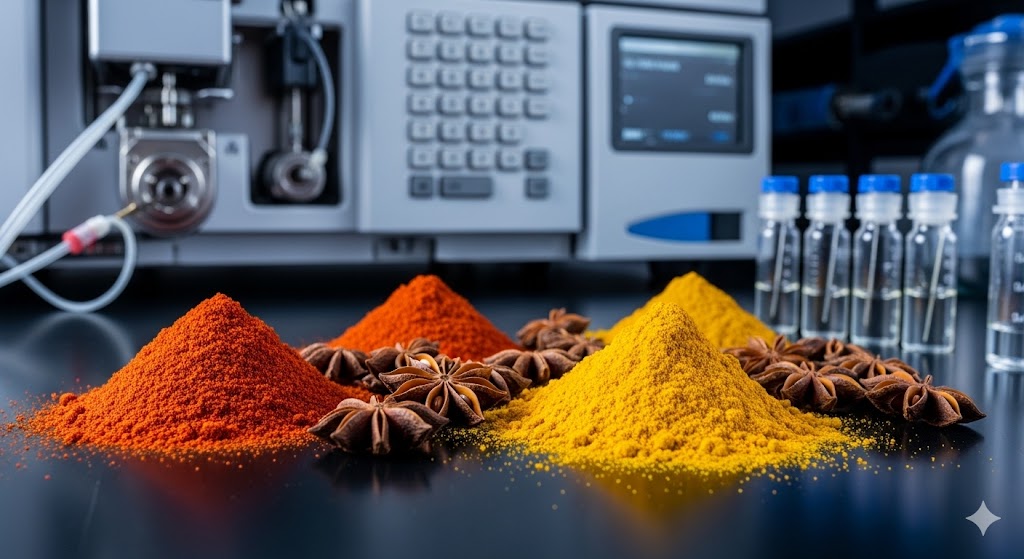
What is Ethylene Oxide (EtO) and why is it used in spices?
Ethylene Oxide (EtO) is a low-cost, highly effective fumigant used globally to sterilize spices against microbial contamination. However, because it is a classified Category 1 carcinogen and mutagen, its use is heavily restricted or entirely banned in many regions, including the European Union.
The global spice trade relies on agricultural sourcing from open environments. Because spices are grown and dried outdoors in countries with varying standards, they are highly susceptible to dangerous pathogens like Salmonella and E. coli. For decades, EtO was the industry’s easiest solution to this problem.
Today, reliance on this invisible gas by overseas suppliers has transformed from a processing shortcut into a massive compliance liability. Ethylene Oxide (EtO) residue testing is now the primary defense against devastating border rejections and multi-national recalls.
Why are we seeing a resurgence in Ethylene Oxide recalls?
We are seeing a resurgence in Ethylene Oxide recalls because regulators are strictly enforcing residue limits while utilizing highly sensitive testing equipment. Even tiny, previously undetectable EtO residues will now trigger immediate regulatory action and massive product recalls.
What began as a localized issue with imported sesame seeds in Europe quickly ballooned into a global supply chain crisis. The European Union’s Rapid Alert System for Food and Feed (RASFF) has registered thousands of notifications related to unauthorized EtO residues. This has led to the withdrawal of millions of dollars’ worth of inventory from supermarket shelves.
The sheer scale of these recalls highlights a dangerous reality for importers and manufacturers. A single contaminated agricultural commodity can infiltrate countless consumer products, triggering a cascading, multi-brand recall event.
Bronte Ushaglyan, Food Scientist and President of United Food Labs, explains the perfect storm driving this resurgence:

“Recalls of spices due to ethylene oxide are resurging because regulators are stricter on residues and testing has become more sensitive. Ethylene oxide is sometimes used abroad to sterilize spices, but it’s not approved for food in many countries. Even tiny residues can trigger recalls. Combined with global spice sourcing and complex supply chains, this has led to more products failing compliance, prompting regulators and brands to take action to protect consumer safety.”
Why is testing for Ethylene Oxide (EtO) and 2-CE so difficult?
Testing for Ethylene Oxide (EtO) is difficult because it is a highly volatile gas that dissipates quickly, but leaves behind a stable, toxic byproduct called 2-Chloroethanol (2-CE). Accurate analysis requires testing for the sum of both the parent gas and the toxic byproduct to ensure compliance.
As EtO penetrates the spice matrix, it reacts with naturally occurring chlorides and moisture in the food to form 2-CE. Because 2-CE is significantly less volatile, it remains permanently trapped within the lipid and cellular structures of the spice. This makes 2-CE the critical “smoking gun” for illegal sterilization.
Regulatory bodies define the Maximum Residue Limit (MRL) for EtO as the sum of Ethylene Oxide and 2-Chloroethanol. Laboratories must employ rigorous extraction techniques to pull this persistent compound out of complex spice matrices without artificially creating more 2-CE during sample preparation.
| Analytical Target | Characteristics | Testing Implication |
|---|---|---|
| Ethylene Oxide (EtO) | Highly volatile gas; breaks down rapidly after fumigation. | Rarely found in high concentrations by the time the spice reaches the destination port. |
| 2-Chloroethanol (2-CE) | Stable, toxic byproduct formed during the EtO reaction. | The primary marker of illegal EtO treatment; must be quantified alongside EtO. |
| GC-MS/MS | Gas Chromatography with Tandem Mass Spectrometry. | The gold-standard instrumentation required to accurately detect parts-per-billion (ppb) levels of both EtO and 2-CE. |
How can spice importers prevent Ethylene Oxide contamination?
Spice importers can prevent Ethylene Oxide contamination by strictly vetting overseas suppliers, demanding independent Certificates of Analysis (COAs), and testing high-risk batches before distribution. You cannot assume spice sterilization safety just because a supplier claims to use alternative methods like steam sterilization or irradiation.
Ushaglyan offers this vital advice to importers navigating high-risk overseas sourcing:
“Importers should start by vetting suppliers carefully, ensuring they follow local regulations and don’t use banned chemicals like ethylene oxide. Request Certificates of Analysis (COAs) for each batch and verify them independently. Implement a testing program for high-risk spices before distribution. Maintain clear documentation and traceability throughout the supply chain. Work with labs familiar with international standards, and consider auditing suppliers periodically.”
Why is third-party Ethylene Oxide testing critical for importers?
Third-party Ethylene Oxide testing is critical because it provides the unbiased, scientifically validated data required to clear customs and protect your brand. Relying on a supplier’s domestic COA is a high-risk strategy, particularly when sourcing from loosely regulated regions where EtO fumigation remains common.
The Value of Independent Verification:
- Customs Clearance: The EU’s Rapid Alert System for Food and Feed (RASFF) aggressively flags and stops shipments lacking verified, independent EtO testing.
- Accurate Methodology: Third-party labs utilize advanced GC-MS/MS equipment to ensure that both EtO and its elusive breakdown product, 2-CE, are accurately quantified at trace levels.
- Brand Protection: A single recall can irreparably damage a brand’s relationship with major retailers. Independent testing acts as your final, uncompromised safety net.
What is the final checklist for a secure spice supply chain?
To ensure a secure spice supply chain, importers must follow a strict safety protocol before distributing products. This includes routine supplier audits, independent chemical testing, and comprehensive traceability.
- [ ] Supplier Audits: Have you physically or virtually audited your overseas suppliers’ sterilization processes (e.g., verifying steam sterilization equipment)?
- [ ] Independent COAs: Do you mandate third-party Ethylene Oxide (EtO) residue testing for every high-risk batch before it leaves the port of origin?
- [ ] Comprehensive Analysis: Does your contract lab test for the sum of both EtO and 2-CE?
- [ ] Traceability Matrix: Can you immediately trace a specific spice lot to all finished products in your inventory in the event of an FDA or EFSA alert?
Don’t let a microscopic residue trigger a macroscopic crisis. Validate your supply chain with rigorous chemical analysis today.
Do you need to verify your imported spices are free of EtO and 2-CE? Visit Contract Laboratory to find a qualified laboratory, or Submit a Testing Request to get competitive quotes for your spice sterilization analysis services today.