
Last Updated: May 7, 2026 — Added: FFPE, cryosectioning, 10% NBF, antigen retrieval (HIER/PIER), pre-analytical variables, digital pathology/WSI, EM preparation, decalcification, FAQ.
The Science of Tissue Preparation
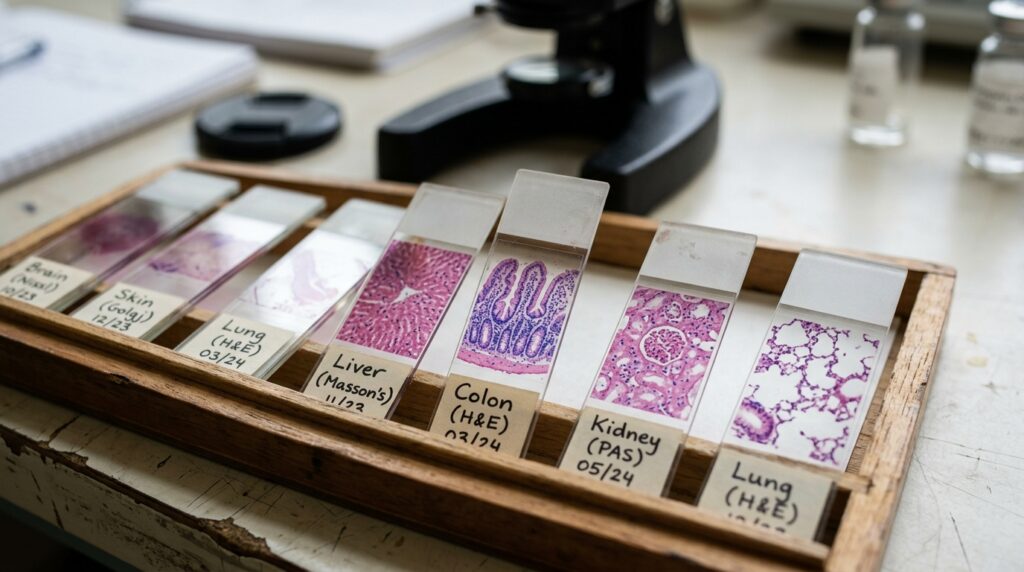
Histology — the microscopic study of biological tissues — provides the definitive visual evidence that underpins clinical pathology diagnosis, pharmaceutical preclinical safety assessment, academic biomedical research, and regulatory submissions. But the microscopic details that pathologists read are only visible because of the meticulous sample preparation that preceded the examination. Raw tissue — soft, wet, metabolically active — cannot be examined directly under a light microscope: it must be chemically fixed to halt degradation, processed and embedded to provide mechanical support for cutting, sectioned to near-cellular thinness, and stained to create the color contrast that distinguishes nuclei from cytoplasm, collagen from muscle, normal cells from malignant ones.
This guide covers the complete histology sample preparation workflow — from the moment tissue is removed until slides are ready for microscopy — across the two major preparation pathways (Formalin-Fixed Paraffin-Embedded, FFPE, and cryosectioning/frozen sections) and specialized protocols for electron microscopy. It includes the pre-analytical variables that determine sample quality before laboratory work begins, the antigen retrieval steps essential for immunohistochemistry on FFPE material, and the digital pathology technologies that are transforming how prepared slides are analyzed.
ContractLaboratory.com connects pharmaceutical companies, CROs, academic researchers, hospitals, and pathology departments with accredited histology, pathology, and cytology laboratories and microscopy and imaging specialists for the full range of histological services.
Pre-Analytical Variables: Quality Begins Before Fixation
The quality of histological and immunohistochemical results is determined partly by what happens in the laboratory — and significantly by what happens to the tissue before it arrives. Pre-analytical variables account for a substantial proportion of histology failures and IHC artifacts.
- Ischemia time — warm and cold: Warm ischemia time is the interval between cessation of blood supply and tissue removal; cold ischemia time is the interval between tissue removal and the start of fixation. During this period, cellular metabolism continues — autolytic enzymes, RNA degradases, and protein modifications all degrade tissue quality. For diagnostic biopsies and surgical specimens, fixation should begin within 1 hour of tissue removal. CAP and ASCO guidelines for breast cancer biomarker testing (HER2, ER, PR IHC) specify cold ischemia time as a pre-analytical quality indicator that must be documented on the pathology request form.
- Specimen size and surface area: Fixatives penetrate tissue by diffusion at approximately 1 mm/hour for formalin. Small needle core biopsies (1–2 mm diameter) are adequately fixed within 1–6 hours. Surgical resections (cm-scale) require biopsy inking, slicing to ≤3–5 mm thickness, and immersion in generous fixative volumes for 18–24 hours (minimum per CAP guidelines) to ensure complete fixation to the specimen’s center.
- Mechanical artifacts: Crush artifacts from excessive forceps pressure during surgical handling, cautery artifacts from electrosurgical devices near the margin, and squeezing artifacts from inadequate tissue handling permanently distort tissue architecture in ways that cannot be corrected by fixation or staining. Proper specimen handling protocols at the surgical site are a prerequisite for quality histology.
- Specimen submission: Tissue should be placed in fixative immediately at the point of removal. Dry tissue submission (without fixative), delayed submission, or submission in the wrong fixative can irreversibly compromise sample quality. Communication between clinicians and the histology laboratory about tissue type, clinical context, and planned staining requirements determines the appropriate fixative for each specimen.
Tissue Preparation Methods: FFPE vs Cryosectioning vs Electron Microscopy
|
Parameter |
FFPE (Paraffin) |
Frozen / Cryosection |
Resin (Electron Microscopy) |
|
Primary fixative |
10% Neutral Buffered Formalin (NBF) |
None (snap-freeze) or brief post-fixation with alcohol/acetone |
2–4% Glutaraldehyde (primary) + Osmium tetroxide (post-fixation) |
|
Embedding medium |
Paraffin wax (56–60°C melting point) |
OCT compound (Optimal Cutting Temperature) |
Epoxy resin (Epon 812, Araldite, Spurr’s) |
|
Sectioning instrument |
Rotary microtome; steel/tungsten blade |
Cryostat (freezing microtome); at -20°C |
Ultramicrotome; diamond or glass knife |
|
Section thickness |
3–5 μm (routine H&E); 3–4 μm (IHC) |
5–10 μm (standard); up to 30 μm (thick sections) |
60–100 nm (ultrathin for TEM) |
|
Storage |
Indefinitely at room temperature (paraffin blocks); slides are stable 10+ years |
Tissue/sections: -80°C for up to 1 year |
Resin blocks: room temperature; ultrathin sections on grids |
|
Morphological quality |
Excellent — best preservation of tissue architecture |
Good — ice crystal artifacts can distort subcellular detail |
Exceptional ultrastructural detail at nm scale |
|
Antigen preservation |
Variable — crosslinking masks epitopes; requires antigen retrieval (HIER/PIER) for IHC |
Excellent — best for sensitive antigens, post-translational modifications |
Modified — osmium fixation limits immunostaining; specialized protocols required |
|
Lipid preservation |
Poor — organic solvent processing dissolves lipids |
Good — cryostat sections preserve lipids; Oil Red O staining feasible |
Excellent — osmium stains and preserves membrane lipids |
|
Primary application |
Routine surgical pathology, cancer diagnosis, IHC, long-term biobank storage |
Intraoperative frozen section diagnosis; enzyme histochemistry; lipid staining; RNA/DNA preservation |
Ultrastructural research; virology; cell biology; material science thin sections |
The FFPE Workflow: Fixing, Processing, Embedding, and Sectioning
Formalin-Fixed Paraffin-Embedded (FFPE) tissue preparation is the most widely used tissue preparation method in clinical pathology and biomedical research. FFPE blocks can be stored indefinitely at room temperature, making them invaluable for retrospective studies — hospital biobanks contain FFPE blocks from biopsies performed decades ago that can be retrieved and re-analyzed with modern molecular techniques.
Step 1: Fixation — Preserving Tissue Architecture
Fixation is the first and most critical step. The standard clinical fixative is 10% Neutral Buffered Formalin (NBF) — a 10% v/v solution of 37% formaldehyde in phosphate-buffered saline (pH 7.0–7.4). The neutral buffer prevents acidification of the fixative (formalin oxidizes to formic acid over time, which damages tissue quality), and the near-physiological pH preserves tissue architecture and IHC antigenicity. The formalin penetrates tissue and reacts with amino groups on proteins and nucleic acids, forming methylene bridges (crosslinks) between adjacent molecules — halting autolysis, killing microorganisms, and stabilizing the tissue’s structural proteins.
Key fixation parameters:
- Formalin concentration and volume: 10% NBF at a tissue: formalin volume ratio of at least 10:1. Insufficient fixative volume depletes formaldehyde before fixation is complete.
- Fixation time: Recommended 6–72 hours for routine biopsies and surgical specimens. Under-fixation (<6 hours for core biopsies) leaves the tissue center unfixed, producing cytoplasmic artifacts and unreliable IHC. Over-fixation (>24–48 hours for small biopsies) causes excessive crosslinking that masks IHC antigens and degrades nucleic acids — a particular problem for molecular pathology assays.
- Temperature: Standard room temperature (20–25°C). Cold fixation (4°C) slows penetration and may be used for certain research applications.
- Alternative fixatives: Glutaraldehyde (used for electron microscopy; provides superior ultrastructural preservation but stronger crosslinking, unsuitable for most IHC); Bouin’s fixative (picric acid/formalin/acetic acid — excellent for reproductive tissues, testes, liver architecture); formal-alcohol (FAAC — formalin/acetic acid/alcohol, rapid fixation with better nucleic acid preservation); zinc formalin (less crosslinking, better IHC compatibility than NBF for some antigens).
Step 2: Tissue Processing — Dehydration, Clearing, and Paraffin Infiltration
After fixation, the tissue must be prepared for paraffin embedding by removing water (paraffin is hydrophobic and cannot infiltrate water-containing tissue) and clearing agents that are miscible with both alcohol and paraffin. This multi-step process is typically performed on automated tissue processors operating overnight:
- Dehydration through graded alcohols: Sequential immersion in increasing concentrations of ethanol (70%, 80%, 90%, 95%, 100% × 2), typically 30–60 minutes per station. Each step removes progressively more water from the tissue.
- Clearing with xylene or xylene substitute: Xylene (or increasingly, xylene-free alternatives such as Clearene, Histolene, or d-limonene-based agents) replaces the alcohol and renders the tissue translucent. Two to three changes of xylene, 30–60 minutes each. Xylene is miscible with paraffin and provides the bridge between the dehydrated tissue and the embedding medium. Xylene-free alternatives are gaining adoption due to xylene’s toxicity and flammability.
- Paraffin infiltration and embedding: The tissue is immersed in molten paraffin (56–60°C) for 2–4 changes, infiltrating all tissue spaces with paraffin. The tissue is then oriented in a metal mold, covered with additional molten paraffin, and cooled on a cold plate to solidify. The resulting FFPE block provides the rigid support matrix required for thin sectioning.
Step 3: Sectioning on the Rotary Microtome
The FFPE block is mounted on a rotary microtome, and sections are cut using a steel, tungsten carbide, or disposable blade. Standard section thicknesses:
- Routine H&E: 4–5 μm. Thin enough to be essentially a single-cell-layer cross-section for most tissues.
- IHC: 3–4 μm. Thinner sections improve antibody penetration and reduce non-specific background.
- In situ hybridization (ISH/FISH): 3–4 μm. Similar to IHC requirements.
- Special stains requiring thick sections: Reticulum stains and some silver stains may be performed on 3–4 μm; fibrin stains for vascular pathology may use 5 μm.
Cut sections are floated on a warm water bath (37–42°C) to flatten the sections and remove cutting folds, then picked up on positively charged glass slides (SuperFrost Plus or equivalent), which electrostatically bind the tissue. Slides are dried at 37–60°C in a slide dryer or oven to remove water and firmly adhere sections before staining.
Cryosectioning: Frozen Section Preparation
Cryosectioning is the alternative to FFPE and is used when speed is critical (intraoperative pathology); sensitive antigens or enzyme activities must be preserved that would be destroyed by formalin crosslinking or paraffin processing; lipid analysis is required (paraffin processing dissolves all lipids); or the same tissue must also be used for molecular biology (RNA extraction, proteomics) alongside histology.
Tissue Preparation and Freezing
Fresh tissue (unfixed or briefly rinsed in isotonic buffer) is placed in a labeled cryomold and embedded in OCT (Optimal Cutting Temperature) compound — a water-soluble polymer that provides a freezing matrix, fills tissue spaces, and transfers heat efficiently during freezing. The mold is then snap-frozen by immersion in isopentane (2-methylbutane) chilled with liquid nitrogen to approximately -80°C, or by placing directly on dry ice. Snap-freezing in isopentane is preferred over direct liquid nitrogen immersion because it avoids the slow thermal conductivity of nitrogen vapor that can create ice crystal artifacts. Frozen blocks can be stored at -80°C for up to one year with acceptable tissue quality.
Sectioning on the Cryostat
Frozen OCT blocks are sectioned on a cryostat — a refrigerated cabinet housing a rotary microtome — at temperatures typically between -15°C and -25°C, depending on tissue consistency. Sections are typically 5–10 μm thick (compared to 3–5 μm for FFPE), because frozen sections are more fragile and difficult to cut thinner reliably. Sections are picked up on warm slides (room temperature slides cause the section to stick immediately on contact), air-dried briefly, and fixed if IHC or immunofluorescence is planned.
Intraoperative Frozen Section Diagnosis
The major clinical application of cryosectioning is the intraoperative frozen section: when a surgeon needs pathological information mid-operation — whether tumor is present at a surgical margin; whether a lymph node is involved by cancer; whether a mass is benign or malignant before proceeding with more extensive surgery — the specimen is sent immediately to the pathology laboratory, sectioned and stained while the patient remains under anesthesia, and the result communicated to the surgeon within 15–20 minutes. This speed is only possible with cryosectioning — FFPE processing takes 12–24 hours. The tradeoff is that frozen section morphology is inferior to FFPE, and frozen sections are used for rapid triage, with FFPE processing and final definitive diagnosis on permanent sections the standard of care for most specimens.
Staining Techniques in Histology
After sectioning and mounting, the tissue must be stained to be visible under the microscope. FFPE sections must first be deparaffinized (incubated in xylene or xylene substitute to dissolve the paraffin) and then rehydrated through a graded alcohol series back to water) before aqueous staining. Frozen sections are fixed briefly (acetone, methanol, or 4% paraformaldehyde) after cutting and do not require deparaffinization.
Hematoxylin and Eosin (H&E) — The Universal Stain
H&E is the foundational stain in all pathology laboratories worldwide — the first stain applied to any tissue and the standard against which all other techniques are compared. Hematoxylin, a basic dye derived from the logwood tree, stains acidic (negatively charged) structures blue-purple: primarily cell nuclei (rich in DNA/RNA), nucleoli, and rough endoplasmic reticulum. Eosin, an acidic dye, stains basic (positively charged) structures pink to red: cytoplasm, collagen, fibrin, red blood cells, and muscle. The resulting H&E slide shows the full tissue architecture with immediate cellular-level resolution.
For a comprehensive guide to the full range of histological stains, their mechanisms, and applications, see our article on common histology stains.
Special Stains
Special histochemical stains highlight specific tissue components not distinguished by H&E:
- Periodic Acid-Schiff (PAS): Stains carbohydrates (glycogen, mucins, basement membranes, fungal cell walls) magenta. Used for glycogen storage diseases, basement membrane abnormalities (glomerular disease), and fungal infections.
- Masson’s Trichrome: Stains collagen blue or green, muscle red, and nuclei dark brown/black. Used for assessing liver fibrosis, myocardial fibrosis, and connective tissue diseases.
- Congo Red: Stains amyloid deposits orange-red under standard light; exhibits characteristic apple-green birefringence under polarized light. Essential for diagnosing amyloidosis in kidney, liver, and heart biopsies.
- Alcian Blue: Stains acidic mucins blue at pH 2.5; distinguishes mucin types at different pH values. Used for identifying intestinal metaplasia, mucinous tumors.
- Ziehl-Neelsen (ZN): Carbol-fuchsin stain for acid-fast bacilli (Mycobacterium tuberculosis, M. leprae). The mycobacterial cell wall retains the red dye after acid-alcohol decolorization.
- Gomori Methenamine Silver (GMS): Silver impregnation staining for fungi, Pneumocystis jirovecii, and basement membranes. Fungi appear black against green counterstain.
- Reticulin / Gordon-Sweet silver: Stains reticular fibers (type III collagen) black. Used for assessing liver fibrosis, myelofibrosis, and reticular network disruption in lymphomas.
- Oil Red O (on frozen sections only): Stains neutral lipids (triglycerides, neutral fat) bright red. Must be performed on cryostat sections — paraffin processing dissolves all lipids. Used for hepatic steatosis (fatty liver) and lipid storage diseases.
Immunohistochemistry (IHC) and Antigen Retrieval
Immunohistochemistry (IHC) uses antibodies to detect specific proteins (antigens) in tissue sections, providing diagnostic information about protein expression, localization, and abundance that H&E cannot supply. IHC is essential for cancer subtyping (HER2, ER, PR, Ki-67 in breast cancer; PD-L1 in lung cancer); infectious disease diagnosis (viral antigens, bacteria, fungi); origin of metastatic tumors; and protein expression studies in research. See our dedicated guide to immunohistochemistry (IHC) for detailed methodology.
Antigen Retrieval — A Critical Prerequisite for IHC on FFPE Sections
Formalin fixation creates methylene bridges between adjacent proteins — this crosslinking is what preserves tissue structure but also masks epitopes (the specific antibody-binding sites on target antigens), rendering them inaccessible to IHC antibodies. On unfixed frozen sections, antigens are generally accessible, and antigen retrieval is not required. On FFPE sections, antigen retrieval is almost always required — IHC without retrieval typically fails or produces weak, non-specific results.
Two antigen retrieval methods are used:
- Heat-Induced Epitope Retrieval (HIER): The most widely used method. FFPE sections are heated in a retrieval buffer at 95–100°C for 10–20 minutes — typically in a pressure cooker, steamer, microwave, or automated staining platform. The combination of heat and aqueous buffer breaks the methylene cross-links and restores epitope accessibility. Two standard buffer systems: citrate buffer pH 6.0 (most commonly used; preferred for most antibodies); Tris-EDTA buffer pH 9.0 (preferred for some nuclear antigens and a growing number of antibodies). The choice of retrieval buffer and temperature conditions must be validated for each antibody-tissue combination.
- Protease-Induced Epitope Retrieval (PIER): Enzymatic digestion of crosslinks using proteinase K, trypsin, or pepsin at 37°C for 5–30 minutes. Used for specific antibodies and tissue types where heat retrieval is suboptimal. Less commonly used than HIER in modern automated IHC systems.
Over-retrieval can be as problematic as under-retrieval: excessive heat or time destroys tissue morphology, causing sections to detach from slides and generating non-specific staining patterns. Antigen retrieval optimization is a critical component of IHC method validation in any histology laboratory.
Tissue Decalcification for Bone and Calcified Specimens
Bone, teeth, and heavily calcified soft tissues cannot be directly embedded in paraffin wax — the mineral calcium hydroxyapatite [Ca₁₀(PO₄)₆(OH)₂] is too hard for microtome blades to section. After fixation, calcified specimens require decalcification to remove calcium before processing. Two approaches:
- EDTA (Ethylenediaminetetraacetic acid) decalcification: Slow — weeks at room temperature, or days at 37°C with agitation — but gentle. EDTA chelates calcium ions without acid-mediated tissue damage. EDTA-decalcified bone provides excellent morphology and preserves antigens for IHC and nucleic acids for molecular testing. Required for research applications and modern oncological bone pathology, where HER2 or molecular testing is needed.
- Acid decalcification: Much faster — hours to days. Common acids: formic acid (5–10%; gentlest acid, balances speed and quality); nitric acid (faster; more damaging); hydrochloric acid (fastest; most damaging to antigens and nucleic acids). Acid decalcification produces superior morphology for diagnostic histopathology when molecular testing is not planned, but significantly degrades IHC antigenicity and destroys nucleic acids — incompatible with modern molecular pathology.
Electron Microscopy (EM) Sample Preparation
Transmission Electron Microscopy (TEM) requires tissue preparation at a fundamentally different scale and with different chemistry than light microscopy. TEM examines tissue at nm-scale resolution, revealing membrane ultrastructure, organelles, viral particles, and intercellular junctions that are invisible by light microscopy. The preparation workflow:
- Primary fixation — glutaraldehyde (2–4% in cacodylate or phosphate buffer): Glutaraldehyde provides superior ultrastructural preservation compared to formalin because its bifunctional aldehyde groups crosslink proteins more rapidly and comprehensively. Tissue cubes of ≤1 mm³ are processed immediately after excision, or larger pieces are rapidly minced into 1 mm cubes before fixation. Duration: 1–4 hours at 4°C, or overnight for some tissues.
- Post-fixation — osmium tetroxide (1–2% OsO₄): Osmium tetroxide is the critical EM-specific reagent. It simultaneously crosslinks (fixing) and stains membrane lipids and other cellular components, providing the electron density contrast needed for TEM imaging. Duration: 1–2 hours at 4°C. Osmium is highly toxic — requires specialized ventilation and handling.
- Dehydration and resin embedding: Tissue is dehydrated through a graded acetone series and infiltrated with low-viscosity epoxy resin (Epon 812, Araldite, or Spurr’s resin for hard tissues). The resin is polymerized at 60–70°C for 24–48 hours, forming a block that is harder than paraffin.
- Ultramicrotomy — sections 60–100 nm: Resin blocks are sectioned using a diamond or glass knife on an ultramicrotome to produce sections 60–100 nanometers thick — approximately 50–100 times thinner than light microscopy sections. At this thickness, electron beams can penetrate and transmit through the section for image formation.
- Contrast staining — uranyl acetate and lead citrate: Ultrathin sections on copper grids are stained with uranyl acetate (stains nucleic acids and proteins) and lead citrate (stains membranes and general cellular contrast) — heavy metal ions that scatter electrons and create contrast in the TEM image.
Digital Pathology and Whole Slide Imaging (WSI)
The transition from glass slide microscopy to digital pathology is one of the most significant transformations in modern histopathology. Whole Slide Imaging (WSI) scanners digitize complete glass slides at magnifications of 20× or 40× (corresponding to pixel resolutions of 0.5 μm/pixel or 0.25 μm/pixel), producing gigapixel images that can be reviewed, annotated, and shared remotely.
Key applications of digital pathology:
- Telepathology: Remote review of cases by specialist pathologists; particularly important for rare diagnoses and cross-institutional consultations.
- AI-assisted pathology: Machine learning algorithms trained on thousands of annotated WSI images can detect and classify patterns — mitotic figures, tumor-infiltrating lymphocytes, glomerular morphology, tissue fibrosis extent. The FDA has cleared multiple AI/ML-based pathology tools for clinical use, including systems for breast cancer grading and prostate cancer detection. AI-assisted analysis is increasingly standard at major academic medical centers and contract research organizations.
- High-throughput quantitative analysis: Automated cell counting, tumor area quantification, and IHC scoring (H-score, Allred score, Ki-67 index) eliminate inter-observer variability and enable reproducible biomarker quantification across large clinical studies.
- Clinical trial pathology: Multi-site clinical trials require standardized, blinded central review of histological endpoints. Digital pathology distributes cases to central reviewers while blinding to site and treatment assignment.
- Tissue Microarray (TMA) and digital analysis: TMAs assemble hundreds of tissue cores (from different specimens) into a single paraffin block and slide — allowing simultaneous IHC of multiple patient samples. Digital scanning of TMA slides enables automated core identification and quantitative biomarker scoring across the entire cohort in hours.
Advanced Histological Techniques
Fluorescence-Based Techniques: IF and FISH
Immunofluorescence (IF) uses antibodies tagged with fluorescent dyes (fluorochromes) rather than the chromogenic enzyme-conjugated systems used in standard IHC. IF enables simultaneous detection of multiple targets using different fluorophore channels — multiplex IF can identify 5–10 or more distinct proteins in a single section. Particularly important in renal pathology (GBM staining for IgG, IgM, C3), dermatopathology (direct IF for autoimmune blistering diseases), and research applications. Fluorescence In Situ Hybridization (FISH) uses fluorescently labeled DNA probes to detect gene amplifications, deletions, and translocations directly in tissue sections — essential for HER2 gene amplification testing in breast cancer and ALK, ROS1, and RET rearrangement testing in lung cancer.
Laser Capture Microdissection (LCM)
LCM uses a focused laser beam to precisely cut and capture specific cells or tissue regions from a stained section under microscope guidance. A laser pulse cuts the desired area free from the surrounding tissue, and a thermoplastic membrane transfers the material to a collection tube — providing pure cell populations for downstream molecular analysis (RNA sequencing, proteomics, DNA mutation analysis). LCM is essential when comparing the molecular profile of tumor cells vs. surrounding normal stroma, or analyzing rare cell populations that cannot be isolated by bulk tissue methods.
Confocal and Super-Resolution Microscopy
Confocal laser scanning microscopy uses a pinhole aperture to reject out-of-focus light, producing optically sectioned, three-dimensional fluorescence images of tissue sections at higher resolution and contrast than standard fluorescence microscopy. Super-resolution microscopy techniques (STORM, PALM, STED) break the diffraction limit of light microscopy and image molecular structures at 20–50 nm resolution — increasingly applied to histological sections for cell biology research.
Quality Control in Histology Preparation
Quality histology requires documented quality management systems covering the entire workflow from specimen receipt to final reporting:
- Tissue tracking: Every specimen is assigned a unique accession number at receipt; blocks and slides are labeled with specimen identifier, block identifier, and section level to maintain chain-of-custody throughout preparation.
- Positive and negative controls: Each staining run includes a positive control (tissue known to express the target antigen) and a negative control (the same tissue with the primary antibody omitted) to validate staining performance. CAP accreditation requires documented control results for each IHC run.
- Section quality assessment: Sections are assessed for thickness consistency, freedom from folds and tears, complete deparaffinization, and adequate staining intensity before release for pathological examination.
- Proficiency testing: CAP, CLIA, and UKAS-accredited histology laboratories participate in proficiency testing programs (CAP Anatomic Pathology Education Programs) to demonstrate performance against inter-laboratory benchmarks.
Finding Accredited Histology and Pathology Laboratories
Histology services for clinical, pharmaceutical, and research applications require laboratories with appropriate accreditation and regulatory compliance: ISO/IEC 17025 accreditation for testing laboratories; CLIA certification (and CAP accreditation) for clinical diagnostic histopathology; GLP compliance for pharmaceutical preclinical safety studies; and FDA 21 CFR Part 11 compliance for computerized systems in regulated pharmaceutical research. For IHC-based biomarker testing in clinical trial contexts, specific CAP/ASCO guideline compliance (e.g., HER2, PD-L1) and inter-laboratory concordance testing documentation are required.
ContractLaboratory.com connects pharmaceutical companies, CROs, academic researchers, and clinical facilities with specialized histology, pathology, and cytology laboratories for the full range of histological preparation and analysis services — from routine FFPE processing and H&E staining through complex multiplex IHC, FISH, digital pathology, and electron microscopy. See also our resources on immunohistochemistry, histology stains, and microscopy and imaging services.
Frequently Asked Questions About Histology Sample Preparation
FFPE stands for Formalin-Fixed Paraffin-Embedded — the most widely used method for tissue preparation in clinical pathology and research histology. In the FFPE workflow, fresh tissue is fixed in 10% Neutral Buffered Formalin (NBF) for 6–72 hours (depending on size), processed through graded alcohols and xylene to remove water, infiltrated with molten paraffin wax, and solidified in a paraffin block. FFPE is the standard for several reasons: it provides excellent preservation of tissue architecture and cellular morphology; FFPE blocks can be stored at room temperature for decades (hospital biobanks routinely archive FFPE blocks from 20–30+ years ago); and it is compatible with the full range of histological staining techniques, including H&E and most IHC applications (with antigen retrieval). The main limitation of FFPE compared to frozen sections is that formaldehyde crosslinking masks protein epitopes, requiring antigen retrieval before IHC, and the organic solvent processing destroys lipids, making lipid staining impossible on FFPE sections.
FFPE (Formalin-Fixed Paraffin-Embedded) and frozen cryosections are the two major tissue preparation workflows in histology, each with distinct advantages. FFPE: tissue is chemically fixed in formalin, processed, and embedded in paraffin wax; sections are 3–5 μm thick; provides excellent morphological detail and long-term storage stability at room temperature (indefinitely); ideal for routine surgical pathology and most IHC. Frozen sections: fresh tissue is snap-frozen without chemical fixation, embedded in OCT compound, and sectioned on a cryostat at 5–10 μm; must be stored at -80°C (up to 1 year); provides faster results (critical for intraoperative frozen section diagnosis — result in ~20 minutes while the patient is still in surgery); better preserves sensitive antigens, enzyme activities, and lipids that paraffin processing destroys; required when the tissue must also be used for RNA/DNA extraction. The morphological quality of frozen sections is generally inferior to FFPE, so frozen sections are used for rapid clinical decisions during surgery, while FFPE sections are used for definitive permanent diagnosis and most research applications.
Antigen retrieval is a required pre-treatment step for immunohistochemistry (IHC) on FFPE tissue sections. Formalin fixation forms methylene bridges (crosslinks) between proteins — this stabilizes tissue architecture but masks the epitopes (antibody-binding sites) on target proteins, making them inaccessible to IHC antibodies. Without antigen retrieval, IHC on FFPE sections typically fails or produces weak, non-specific results. Heat-Induced Epitope Retrieval (HIER) is the standard method: sections are heated at 95–100°C for 10–20 minutes in a retrieval buffer, breaking the cross-links and restoring epitope accessibility. Two common retrieval buffers are citrate buffer pH 6.0 (most widely used) and Tris-EDTA pH 9.0 (preferred for some antigens). Protease-Induced Epitope Retrieval (PIER) uses enzymatic digestion for specific antibody-tissue combinations. Antigen retrieval is not required for frozen (unfixed cryostat) sections, which is one reason frozen sections are preferred for IHC of highly sensitive antigens. The correct retrieval method must be validated for each antibody-tissue combination.
Fixation time depends on tissue size, because formalin penetrates tissue by diffusion at approximately 1 mm per hour at room temperature. Small needle core biopsies (1–2 mm diameter) are adequately fixed in 1–6 hours. Standard surgical biopsies and small tissue pieces (3–5 mm) typically require 6–12 hours. Large surgical specimens (lumpectomies, colectomies, prostatectomies) require biopsy slicing to no more than 3–5 mm thickness and 18–24 hours minimum fixation time per CAP guidelines. Under-fixation (insufficient time or fixative volume) leaves the center of the tissue unfixed, causing cytoplasmic artifacts, unreliable IHC, and poor DNA/RNA quality for molecular testing. Over-fixation (>24–48 hours for small biopsies) causes excessive protein crosslinking that masks IHC antigens and degrades nucleic acids — problematic for molecular pathology testing. Many regulatory guidelines (CAP/ASCO breast biomarker guidelines) specify maximum fixation times of 72 hours to prevent over-fixation artifacts affecting HER2 and hormone receptor IHC results.
Section thickness depends on the preparation method, tissue type, and staining application. For FFPE paraffin sections on a rotary microtome: routine H&E uses 4–5 μm; immunohistochemistry uses 3–4 μm (thinner sections reduce antibody penetration distance and background staining); in situ hybridization (FISH/ISH) uses 3–4 μm; special histochemical stains vary 3–5 μm depending on the protocol. For frozen cryosections: standard 5–10 μm; thicker sections (20–30 μm) may be used for enzyme histochemistry or some fluorescence applications. For transmission electron microscopy (TEM): ultrathin sections of 60–100 nanometers (0.06–0.1 μm) cut by ultramicrotome with diamond knife — approximately 50–100 times thinner than light microscopy sections. Semi-thin sections (0.5–2 μm) cut from resin blocks are used for light microscopy survey before selecting areas for ultrathin TEM sections.
Conclusion
Histology sample preparation is a multi-step, technically demanding discipline that determines the interpretive value of every downstream microscopic examination. The two primary workflows — FFPE for its morphological excellence and archival stability, and cryosectioning for its speed and antigen/lipid preservation — serve complementary clinical and research functions. The critical importance of pre-analytical variables (cold ischemia time, fixation duration), the essential role of antigen retrieval in unlocking IHC on FFPE material, and the expanding capabilities of digital pathology and AI-assisted analysis together define the modern histology laboratory as a sophisticated analytical environment far more complex than the four-step summary of fixing, processing, sectioning, and staining alone can capture.
ContractLaboratory.com connects organizations requiring histological services with accredited histology, pathology, and cytology laboratories across all disciplines. Submit a testing request or contact our team.