
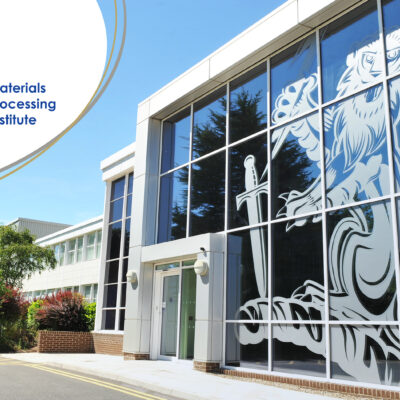
Materials Processing Institute
Interested in working with
Materials Processing Institute
Profile
Lab Biography
1. Chemical / Compositional Analysis Lab
Typical equipment
-
XRF for bulk chemistry of metals, slags, oxides and powders
-
XRD (incl. hot-stage XRD up to ~1600 °C) for phase / mineral ID
-
OES spark spectrometry for metallic alloys
-
SEM with EDS/EBSD for microstructure, inclusions and surface contamination
-
Wet chemistry lab, ICP support, portable FTIR and portable mass spectrometer for in-field or process analysis
What it’s used for
-
Full chemistry of steels, non-ferrous alloys, slags, dusts and process solutions
-
Phase and mineral identification in metals, powders, ores, cements and by-products
-
Inclusion chemistry, tramp element screening, cleanliness, PMI and failure investigations
-
Chemical support to hydrometallurgy, recycling and cement/concrete projects
2. Thermal Analysis Lab
Typical equipment
-
STA 449 / 409 (TGA + DSC/DTA) with quadrupole mass spectrometer (STA-QMS) up to 2400 °C
-
Stand-alone TGA, DSC, DTA systems
-
Calorimeter and ageing chambers (-50 to +180 °C, humidity control)
-
Hot-stage XRD for in-situ phase evolution
What it’s used for
-
Decomposition, oxidation, melting, phase transitions and enthalpy of metals, powders, slags, polymers and ceramics
-
Evolved gas analysis (CO, CO₂, H₂, H₂O, organics) to understand reaction mechanisms
-
Thermal stability and reactivity of cements, concretes and alternative binders
-
Thermal behaviour of feedstocks for pyro/ hydro-metallurgical and decarbonisation processes
3. Metals & Metallography Lab
Typical equipment
-
Optical microscopy, macro-etching, sulphur printing
-
SEM/EDS (and EBSD/WDS where required) for detailed microstructural analysis
-
XRD/XRF/OES access for coupled structural–chemical work
What it’s used for
-
Microstructure and grain size measurement; phase fraction quantification
-
Inclusion rating, banding, decarburisation depth, case depth verification
-
Weld macro/micro examination and HAZ mapping
-
Root-cause failure analysis of components and trial products
4. Mechanical Testing Lab
Typical equipment
-
Tensile and compression test frames (room and elevated temperature)
-
Charpy impact, creep and impression-creep rigs
-
Hardness: Brinell, Vickers, Knoop, Rockwell; macro and micro hardness mapping
-
Ancillary tests: tribology, modulus by indentation, expansion tests, ageing chambers
What it’s used for
-
Qualification of new metals, welds and additive parts (strength, toughness, ductility, creep)
-
Property mapping across sections, cases and HAZs
-
Mechanical validation of materials produced in pilot furnace / rolling trials and in cement/concrete programmes
5. Powder & Additive Manufacturing Lab (AMCC)
Typical equipment
-
Laser Powder Bed Fusion (LPBF / DMLM) machine for metal AM
-
Powder characterisation suite:
-
Malvern Morphology 4 (shape, size, circularity)
-
Granudrum (flowability, avalanche angle)
-
Granupack (bulk & tap density)
-
Nanovea profilometer (surface roughness / 3D profile)
-
-
PSD analysis, flowability tests, milling, sieving and powder recycling rigs
What it’s used for
-
Full powder QA: size, morphology, chemistry, flow and packing behaviour
-
Benchmarking powders from different suppliers and powder reuse strategies
-
AM process development: parameter optimisation, new alloy powders, post-processing and mechanical testing of printed parts
-
Powder metallurgy development and scale-up from grams to kg
6. Cement & Concrete Lab (Sustainable Cement and Concrete Centre)
Typical equipment
-
Mixing & casting: 10 L and 70 L pan mixers, mortar mixer, vibrating tables, workability/flow equipment
-
Curing & storage: water tanks, temperature-controlled containers
-
Durability: sulphate resistance container, carbonation chambers, chloride migration rig, freeze–thaw ageing, calorimeter, air-entrainment meters
-
Strength & physical testing: compressive strength rigs, Vicat apparatus, density and surface measurements, bulk materials processing (drum mill, jaw crusher, diamond cutter)
What it’s used for
-
Design and testing of novel cements, alkali-activated binders and concretes using industrial by-products and slag
-
Mechanical and durability testing of mortar and concrete for product qualification
-
Process optimisation and derisking of low-clinker and clinker-free systems, including slag cooling and formulation optimisation using ML tools
Industry Types Served
- Automotive, Aviation, & Transportation
- Chemicals & Petrochemicals
- Construction & Building Materials
- Cosmetics & Personal Care Products
- Environmental & Waste Management
- Glass & Ceramic Products
- Industrial Machinery & Components
- Medical Devices & Healthcare Products
- Metals & Metallurgical Products
- Mining & Mineral Products
- Oil & Gas Products
- Power & Energy
Lab Testing Types Offered
- Advanced Material Characterization
- Building & Construction Materials
- Coatings & Surface Analysis
- Composition & Alloy Identification
- Corrosion & Environmental Stress Testing
- Electron & Probe-Based Imaging
- Extractables, Leachables & Impurity Testing
- Fatigue & Fracture Mechanics
- Formulation, Deformulation & R&D
- Friction, Wear & Tribology Analysis
- Impact & Shock Resistance Testing
- Mechanical & Hardness Testing
- Metallography & Microstructure Evaluation
- Metals & Alloys Evaluation
- Non-Destructive Testing (NDT)
- Optical & Light-Based Microscopy
- Optical Testing
- Precious & Base Metal Analysis
- Spectroscopic & Advanced Imaging
- Strength & Stress/Strain Testing
- Surface & Texture Testing
- Thermal & Mechanical Properties Analysis
- X-ray & Tomographic Imaging Techniques