
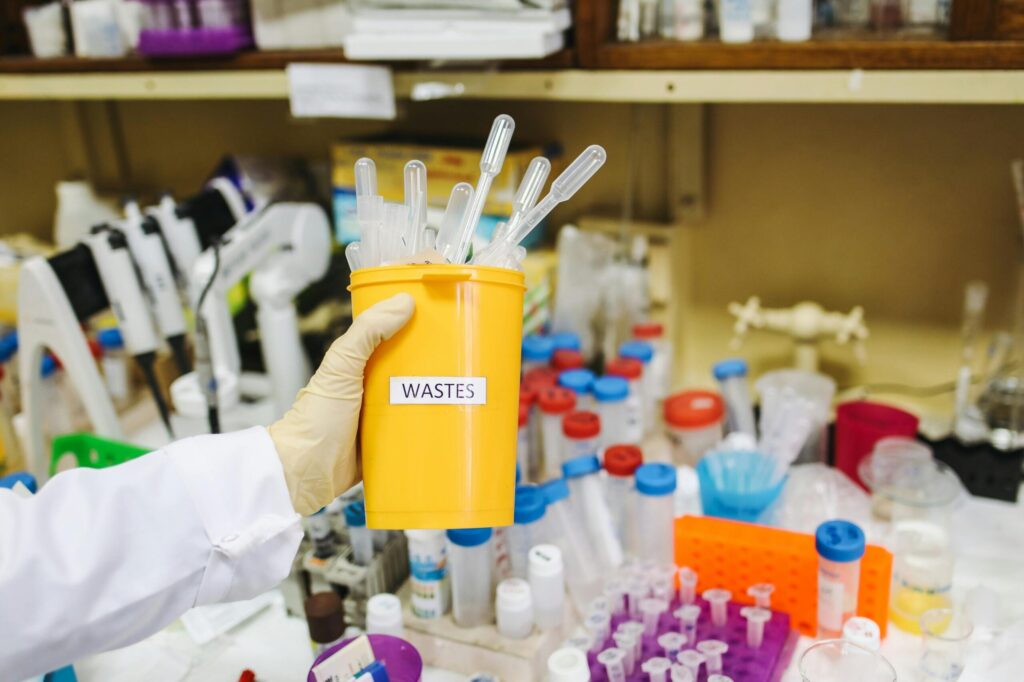
Disposing of medical waste may seem straightforward, but even the most experienced laboratory teams can fall into bad habits or overlook small details that carry big consequences. From mislabeling containers to improperly segregating waste types, these seemingly minor missteps can lead to serious compliance violations, health risks, and unnecessary costs.
The reality is that proper medical waste management in labs requires a clear understanding of regulations and consistent staff training. Unfortunately, some of the most common mistakes are also the easiest to avoid once you know what to watch for.
Key Takeaways
- High Financial Stakes: Misclassifying or mixing regulated and non-regulated waste can inflate disposal costs tenfold and trigger regulatory fines of up to $70,000 per incident.
- Safety First: Noncompliant containers and lapsed staff training account for a significant percentage of needlestick injuries and occupational hazards.
- Compliance is Complex: Staying compliant means navigating overlapping local, state, and federal regulations (EPA, OSHA, DOT).
Common Errors in Segregating Medical Waste
1. Improper Identification of Hazardous Materials
Laboratory staff often misclassify waste due to a lack of training on hazardous material identification. Chemotherapy waste, for example, requires special handling but is frequently disposed of with regular biohazardous materials. This error alone can result in severe regulatory violations and EPA fines of up to $70,000 per incident.
Many labs fail to properly identify items with trace chemotherapy contamination. Any gloves, gowns, and tubing used during preparation or administration need special disposal methods. Similarly, misidentifying pathological waste is a frequent misstep. Tissues and anatomical parts require different handling from general biohazardous waste and must be segregated for specialized histology and pathology disposal protocols.
Key identification errors include:
- Failing to distinguish between RCRA and non-RCRA hazardous pharmaceuticals.
- Overlooking multi-hazard waste that fits into multiple categories.
- Incorrectly classifying sharps that contain medication residue.
2. Mixing Regulated and Non-Regulated Waste
It’s a common mistake for laboratories to combine regulated medical waste with regular trash, which can significantly increase disposal costs. When non-regulated items enter the regulated waste stream, labs end up unnecessarily paying for premium waste disposal fees, which can be up to 10 times the cost of regular waste disposal.
Keep these items OUT of your regulated waste:
- Standard packaging materials and cardboard.
- Empty containers (that do not contain free-flowing blood or visible infectious residue).
- Personal protective equipment (PPE), not contaminated with hazardous materials.
- Office waste from administrative laboratory areas.
This mixing often stems from convenience rather than compliance. Staff may find it easier to dispose of everything in the nearest container—which, in a lab, will typically be a hazardous waste container—rather than making proper segregation decisions.
3. Failure to Use OSHA-Compliant Containers for Lab Medical Waste
Using incorrect containers for medical waste creates safety risks and compliance issues.
Sadly, it’s still a common practice for sharps to be disposed of incorrectly in red bags rather than the necessary puncture-resistant containers, which poses a significant risk of injury to anyone who later handles that waste. According to OSHA data, this is responsible for 35% of needlestick injuries among waste management personnel. Sharps containers must be puncture-resistant, leak-proof, and clearly labeled, and regular inspection should be performed to verify that these containers remain intact and properly sealed.
Additionally, waste containers are often filled to their maximum capacity, which can cause serious problems. When containers exceed their fill line (typically 75-80% capacity), they cannot be properly sealed, increasing spill and exposure risks. Staff often cite time constraints as a reason for not replacing full containers promptly. However, this short-term efficiency creates greater long-term risks and costs.
Some labs also use containers without proper labeling or fail to secure container lids between uses, violating both OSHA and EPA requirements. Each container requires clear identification of contents, hazard type, and the date that the waste was generated. These seemingly minor oversights can result in significant penalties during regulatory inspections.
4. Falling Behind on Regulatory Compliance and Training
Many laboratories mistakenly focus exclusively on federal regulations while overlooking state or local requirements that may actually be more stringent. Laboratories also struggle with conflicting regulations between agencies, often defaulting to the least stringent requirements rather than ensuring full compliance.
- Inadequate Training: Without comprehensive, documented training programs covering all specific waste streams, labs cannot demonstrate compliance during inspections. Ensure your team undergoes regular safety certification and compliance training.
- EPA & DOT Oversight: Are your hazardous materials manifested correctly? Neglecting to verify waste hauler credentials or failing to follow EPA RCRA guidelines can halt your lab’s operations entirely.
3. Insufficient Record Keeping
Poor documentation practices represent one of the most preventable yet common compliance failures in laboratory settings. Many labs fail to maintain the required three to five years of waste disposal records. Electronic record systems often lack proper backup protocols or suffer from inconsistent data entry practices. This creates gaps in the documentation chain that can prove problematic during audits.
Furthermore, safety oversights like failing to provide appropriate PPE (fluid-resistant gowns, face shields, respiratory protection) leave staff vulnerable. Labs handling hazardous materials should implement exposure monitoring programs, including regular health surveillance and toxicology testing for workers regularly exposed to dangerous waste.
Partner with Certified Experts
The most effective way to avoid these costly pitfalls is by partnering with a certified medical waste management company. A qualified partner provides expert guidance, ensures overlapping local and federal regulatory compliance, and offers tailored solutions for safe, efficient disposal.
Need help managing your laboratory’s medical and hazardous waste?
Submit a lab request on the Contract Laboratory platform to get waste management services and guidance today!
This article was created with the assistance of Generative AI and has undergone editorial review before publishing.
Frequently Asked Questions (FAQs)
Penalties vary depending on the regulatory body and the severity of the violation. However, the EPA can levy fines of up to $70,000 per incident for improper disposal of hazardous waste, such as RCRA-regulated pharmaceuticals. State and local fines, as well as OSHA penalties for unsafe workplace practices, can add to this cost.
Most federal and state regulations require laboratories to maintain accurate medical waste disposal records, including waste manifests and destruction receipts, for a minimum of three to five years. These records are critical during routine compliance audits.
Regulated medical waste (RMW) includes items contaminated with blood, infectious materials, pathological waste, and hazardous chemicals (like chemotherapy residue) that require specialized treatment. Non-regulated waste includes standard office trash, uncontaminated packaging, and clean PPE, which can be disposed of in the municipal trash at a fraction of the cost.
Updated on