
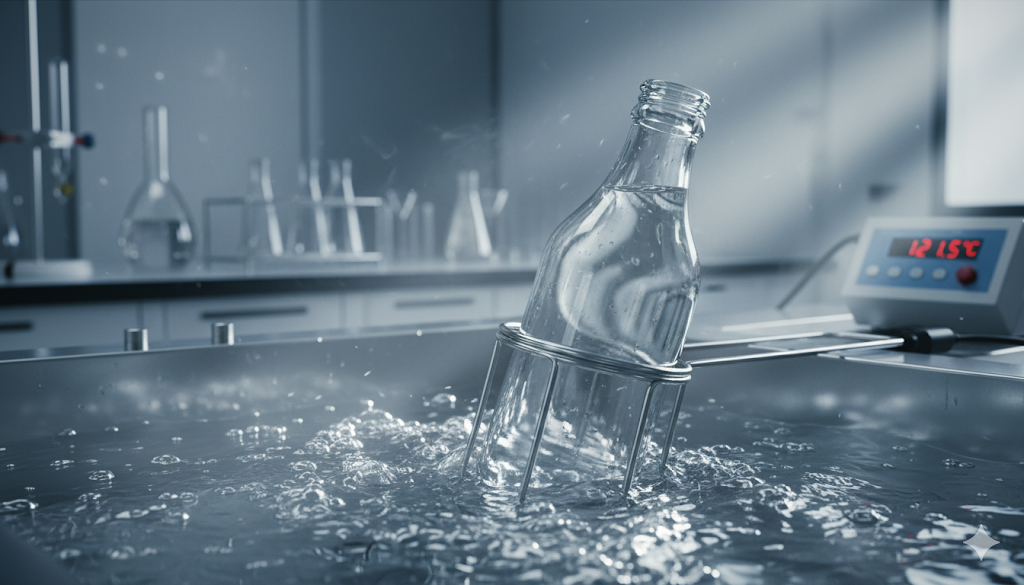
Glass containers are the backbone of the food and beverage, pharmaceutical, and cosmetic industries, trusted for their impermeability, transparency, and high perceived quality. However, the integrity of the product inside—from freshness and shelf life to consumer safety—is entirely dependent on the structural and material quality of the container itself. Therefore, rigorous glass bottle testing and detailed jar analysis are non-negotiable steps in the manufacturing process. Manufacturers must verify that their containers can withstand the rigors of high-speed filling lines, shipping stresses, and consumer use without failing under thermal shock or compromising product quality due to poor chemical durability. This commitment to stringent testing not only ensures food contact safety and compliance but also guarantees a predictable and efficient supply chain. This comprehensive article outlines the core themes and specialized laboratory protocols required to certify glass container performance from factory to shelf.
Mechanical Integrity: Assessing Bottle Strength and Impact Resistance
The journey of a glass container—from the forming machine to the end consumer—involves numerous mechanical stresses, including sudden impacts, internal pressure loads, and static weight. Ensuring robust bottle strength is paramount for preventing costly production interruptions, package failure during transport, and potential consumer injury.
Key Tests for Bottle Strength and Durability:

- Internal Pressure Resistance (Hydrostatic Test): This test measures the container’s ability to withstand pressure exerted by carbonated beverages or sterilized contents. Bottles are subjected to increasing internal pressure until failure. The results verify the uniformity of the glass walls and the overall hoop strength, which is a critical measure of bottle strength for carbonated goods.
- Vertical Load/Top Load Strength: Essential for containers that will be stacked on pallets or subjected to capping/sealing forces. The test measures the maximum compressive force a bottle or jar can withstand before the finish (top edge) collapses. This is vital for jar analysis and ensuring stability throughout the supply chain.
- Impact Resistance Testing: This simulates accidental knocks and drops during filling, handling, and shipping. Standard methods involve a drop test (measuring resistance to falling onto hard surfaces) or a pendulum test (measuring resistance to lateral impact on the side walls). High-speed filling lines rely on consistent impact resistance to minimize breakage rates.
- Abrasion Resistance: Measures the glass surface’s resistance to scratching and scuffing, which can weaken the glass over time and reduce the visual quality. Coatings applied to the exterior are tested to ensure they maintain their protective and lubricating properties.
By quantifying bottle strength and impact resistance, manufacturers gain the data necessary to optimize wall thickness and container design without sacrificing durability.
Thermal Performance: The Critical Role of Thermal Shock Testing
Glass is highly sensitive to rapid temperature changes. The difference in temperature between the inner and outer surface creates stress that can cause immediate, spontaneous fracture, a phenomenon known as thermal shock. This is a major concern in packaging for pasteurization, sterilization, and hot-fill operations, where the container is rapidly exposed to extreme temperatures.
Protocols for Thermal Shock Resistance:
The standard thermal shock test involves cycling the container between two temperature extremes—often a hot bath and a cold bath—to simulate the worst-case scenarios encountered in processing or cleaning.
- Hot-to-Cold Shock: The most common test involves placing containers in boiling water or an oven, then rapidly submerging them in cold water. The test is repeated with increasing temperature differentials until a predetermined percentage of the sample fails.
- Cold-to-Hot Shock: Conversely, containers are taken from a refrigerated environment and rapidly filled with hot liquid. This mimics filling wine or beverage bottles from cold storage.
| Application Type | Required Thermal Shock Resistance | Testing Standard Focus |
|---|---|---|
| Pasteurization | High (>42∘C differential) | Glass bottle testing for uniform wall thickness |
| Hot Fill | Moderate to High (>30∘C differential) | Design of the heel and base radius (stress points) |
| Sterilization (Pharma) | Very High (>60∘C differential) | Integrity of small vials and ampules |
| Dishwasher Use | Continuous cycling resistance | Long-term stress management and jar analysis |
Thorough thermal shock testing is essential for high-temperature applications, ensuring that the container maintains integrity and bottle strength when transitioning between processing stages.
Container Safety: Chemical Durability and Food Contact Safety
Unlike plastics, glass itself is generally inert. However, the finished surface of the container, particularly the interior, must be tested for its chemical durability to ensure that trace elements from the glass do not leach into the contents and that the product itself does not attack the glass structure. This is fundamental to food contact safety and pharmaceutical integrity.
Assessing Chemical Durability and Safety:
- Internal Chemical Durability (Acid Attack): This is the core test for chemical durability. The interior surface of the container is exposed to de-ionized water or a mild acid (like hydrochloric acid) at elevated temperatures (e.g., 98∘C or 121∘C). The leachate is then analyzed for specific elements (alkalis) released from the glass matrix. Low release rates indicate high chemical durability and prevent contamination of sensitive contents.
- Hydrolytic Resistance: Specifically used for pharmaceutical glass containers (vials, ampules), this test measures the resistance of the glass to releasing soluble mineral substances into the water under harsh conditions. Classification (Type I, II, or III) determines suitability for highly sensitive drug formulations.
- External Chemical Resistance: Assesses the outer surface’s resistance to atmospheric corrosion, cleaning agents, and potential staining agents, which is important for maintaining visual quality throughout the supply chain.
- Food Contact Safety Verification: Beyond the standard chemical durability tests, labs confirm compliance with specific regional regulatory bodies (e.g., FDA, European Union) for all components of the container, including colorants, coatings, and specialized inner seals. This final step is key to ensuring absolute food contact safety.
Rigorous chemical durability testing ensures that the container maintains its inert state, protecting sensitive contents and assuring consumer food contact safety.
Dimensional and Visual Quality: Ensuring Consistency for High-Speed Filling
Consistency in dimension and visual perfection is crucial for automation. Modern high-speed filling and packaging lines operate at incredible speeds, and even minor variations in container geometry can lead to jams, excessive noise, breakage, and equipment damage. Comprehensive jar analysis and glass bottle testing protocols must ensure dimensional uniformity.
Metrics for Dimensional and Visual Quality Control:
- Dimensional Gauging (Critical Features): High-precision digital gauges and automated vision systems measure critical dimensions that interact with filling machinery:
- Finish Diameter (Top): Must be exact for uniform capping/sealing.
- Height and Verticality: Essential for stable placement and labeling consistency.
- Wall Thickness Distribution: Crucial for managing stress; thin spots are failure points.
- Volume and Capacity: Accurate measurement of overall container capacity and the fill point level is mandatory for regulatory compliance (Net Content Regulations) and prevents over- or under-filling.
- Visual Quality and Defect Analysis: The container’s visual quality is checked for aesthetic defects that, while often non-structural, can damage brand image or interfere with light-sensitive contents.
- Defects Checked: Seeds (small bubbles), stones (unmelted materials), checks (surface cracks), and inclusions (foreign matter).
- Polariscopic Examination: Used to detect residual internal stress in the glass caused by non-uniform cooling during manufacture. Excessive or poorly distributed stress can significantly compromise bottle strength and lead to spontaneous failure.
Maintaining high standards in jar analysis and dimensional control is fundamental to maximizing filling line efficiency and minimizing operational waste.
Data-Driven Certainty for Glass Packaging
The reliance on glass packaging demands an unwavering commitment to testing. Comprehensive glass bottle testing is the mechanism through which manufacturers verify the crucial parameters of packaging performance. By subjecting containers to rigorous mechanical, thermal, and chemical analysis, they confirm sufficient bottle strength, adequate resistance to thermal shock, and superior chemical durability. These steps are not merely about quality control; they are essential for ensuring food contact safety, meeting global regulatory requirements, and safeguarding brand reputation against catastrophic failure. Partnering with independent laboratories offers the accredited data required to navigate the complexities of modern manufacturing and delivery.
Submit a testing request today to secure project integrity with reliable, third-party laboratory verification.
FAQ
Dimensional gauging and analysis of bottle strength (top load and internal pressure) are the most critical tests. Consistent dimensional tolerance and high bottle strength ensure containers move smoothly through cappers, fillers, and labelers without jamming or breaking, preventing costly operational downtime.
Thermal shock testing is directly related to food contact safety because many foods and pharmaceuticals are processed using high heat (e.g., pasteurization or sterilization). If the glass fails under thermal shock, the product is compromised, and the breakage itself creates a safety hazard.
Chemical durability refers to the glass’s resistance to corrosion or leaching when exposed to liquids. In jar analysis, this is vital to confirm that the glass components (especially alkalis) do not leach into the stored product, which could alter the taste, potency, or safety of the contents, especially over long shelf periods.
Residual stress testing (polariscopic analysis) identifies internal stresses caused by non-uniform cooling. Undetected excessive stress can dramatically compromise the bottle strength and lead to spontaneous breakage months after manufacture. This analysis is key to long-term durability assurance.
This article was created with the assistance of Generative AI and has undergone editorial review before publishing.