
While much attention is paid to the fabric’s material composition and colorfastness, the silent workhorses of any garment—the zippers, buttons, snaps, and rivets—are often the first points of functional failure, leading directly to returns, customer complaints, and potential regulatory hazards. These seemingly minor components, collectively managed through comprehensive fastener testing, represent the final critical line of defense for product quality control and safety. A broken snap on infant wear can become a choking hazard, while a faulty zipper can render an expensive jacket unusable. Effective fastener testing is a non-negotiable insurance policy against these risks, ensuring that every piece of hardware can withstand the rigors of manufacturing, repeated wear, and laundering without failing structurally or leaching harmful chemicals. For manufacturers and importers committed to long-term market trust, integrating rigorous third-party accessory testing is essential to confirming that these small components meet the exacting safety standards of global commerce.
Beyond Aesthetics: Fastener Testing as the Foundation of Garment Function
Fasteners and accessories are functional components, not just decorative elements. Their successful operation—the ability to open, close, and remain securely attached—is fundamental to the garment’s intended use. When a zipper durability test fails, the item is instantly deemed defective; when a button fails a button testing protocol, it poses a direct risk, particularly in children’s wear. Therefore, initial fastener testing must focus on confirming the mechanical integrity and consistency of the entire batch of hardware before it is incorporated into the apparel. This process extends beyond simple visual checks to quantitative measurements that simulate real-world stress over time.
The Role of Fastener Quality Control:
- Consistency in Manufacturing: Accessories, especially molded plastic or metal ones, must be consistent in size and shape to ensure proper fit and automated application. Inconsistent fasteners lead to machine breakdowns and poor application quality.
- Aesthetic Longevity: Plating and surface treatments (e.g., anti-tarnish, paint) must resist chemical attack from detergents, perspiration, and environmental factors. Accessory testing ensures finishes do not chip or fade prematurely.
- Endurance: The fastener must maintain its functionality throughout the garment’s life cycle. This means the zipper must glide smoothly for hundreds of cycles, and a snap must maintain its required retention force after dozens of uses.
By implementing mandatory fastener testing protocols at the incoming material stage, brands can achieve superior quality control, reducing waste and preventing production shutdowns caused by inferior hardware. This proactive approach transforms a liability into a verified asset.
Mechanical Integrity: Mastering Pull Strength and Durability for Safety
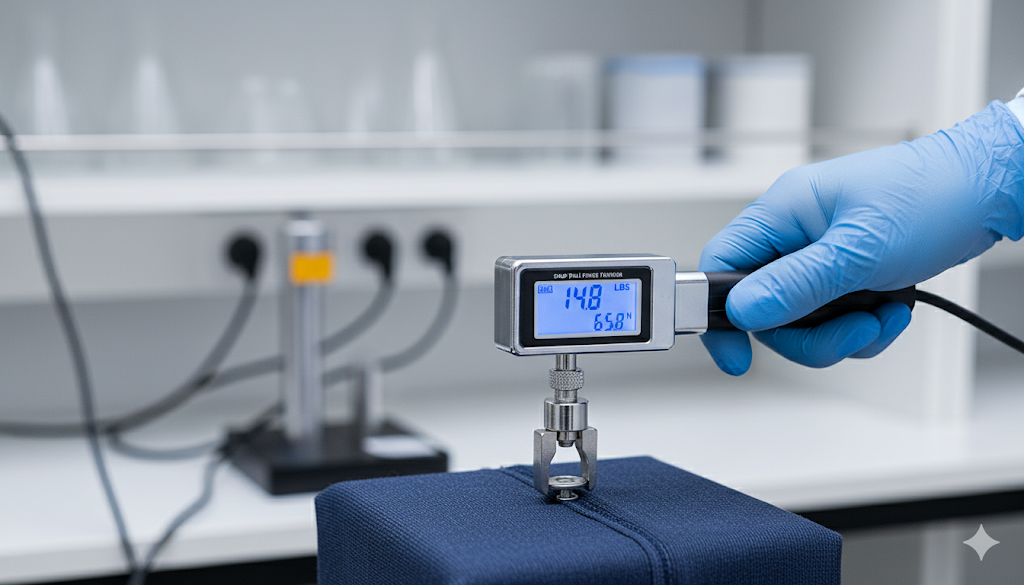
The most critical aspect of mechanical fastener testing, particularly for items intended for children, is the assessment of pull strength. Any component—a button, snap, rivet, or decoration—that can detach and be swallowed is classified as a potential choking hazard. Global safety standards, such as those enforced by the U.S. Consumer Product Safety Commission (CPSC) and the European Toy Safety Directive (EN 71), mandate strict thresholds for the force required to remove a component.
Essential Mechanical Accessory Testing:
| Test Method | Objective | Key Regulatory Context |
|---|---|---|
| Pull Strength (Snap Pull Testing) | Measures the force (usually in pounds or Newtons) required to detach a securely fixed snap, button, or toggle. | Mandatory for children’s products (often 15 lbs minimum retention force for snaps/buttons). |
| Button Testing (Impact Resistance) | Assesses the ability of a button (or other rigid fastener) to resist breakage or shattering when subjected to impact from a specified height and weight. | Ensures rigid parts do not shatter into small, sharp, or ingestible pieces. |
| Torque Testing | Measures the force needed to twist a component (like a toggle or safety eye) off its anchoring point. | Prevents accidental removal of non-sewn attachments during play or use. |
| Fatigue Testing | Repeatedly applying and releasing tension to fasteners to simulate extended consumer use. | Essential for assessing long-term integrity and functional quality control. |
Comprehensive button testing and snap pull tests utilize specialized spring-loaded clamps and gauges to ensure consistency. A minor weakness in stitching or crimping during application can lead to a pull strength failure, highlighting the importance of testing not just the fastener itself, but the entire fastening system as attached to the garment material. This is where meticulous accessory testing truly safeguards the user.
The Zipper Challenge: Protocols for Ensuring Zipper Durability and Longevity
The modern zipper is a complex system involving dozens of interlocking teeth, a slider, a pull tab, and multiple woven tapes, all of which must work in perfect synchrony. Zipper durability testing is therefore one of the most comprehensive forms of fastener testing, designed to evaluate functional lifespan and structural resilience under conditions that exceed normal use.
A failure in zipper durability can occur in several ways: the teeth might separate spontaneously (crosswise strength failure), the slider might break off its track, the pull tab might snap under force, or the tape might rip away from the garment seam. To preempt these failures, laboratories subject zippers to rigorous cyclical and structural assessments:
- Reciprocating Cycling Test: The zipper is machine-operated (opened and closed) hundreds or thousands of times under slight tension to simulate long-term use. This determines the overall zipper durability and checks for consistent slider movement and tooth failure.
- Slider Locking Strength: For locking zippers (common in pants and activewear), the test ensures the slider remains fixed and does not travel down when tension is applied to the teeth.
- Lateral/Crosswise Strength: This test measures the force required to pull the two sides of the zipper apart when it is closed, ensuring the integrity of the teeth interlocking system.
- Top/Bottom Stop Durability: Ensures the end stops are securely affixed to prevent the slider from leaving the track, a common failure point that renders the entire zipper non-functional.
Reliable zipper durability is paramount for items ranging from industrial uniforms to high-end fashion. The expense of a robust accessory testing program for zippers is minimal compared to the cost of a full production recall due to widespread fastener failure.
Chemical Compliance: Accessory Testing for Restricted Substances
While the mechanical failure of a fastener is immediate and visible, chemical failure is insidious and governed by strict global safety standards. Metal and plastic accessories, particularly those produced overseas, pose significant risks of containing heavy metals or restricted substances used in plating, pigments, or stabilizers. Chemical fastener testing is mandatory to prevent these harmful elements from coming into contact with consumers.
The primary chemical concerns in accessory testing involve:
- Lead Content: A critical focus, especially for children’s products, where safety standards mandate extremely low or non-detectable levels of lead in any accessible component, including metal zippers and painted buttons.
- Nickel Release: Nickel is a common skin sensitizer and allergen. Button testing and checks for other metal accessories (snaps, rivets) ensure that the rate of nickel released upon contact with skin is below the regulated threshold, especially in the European Union (REACH).
- Phthalates and AZO Dyes: While more common in fabric, plastic zippers, pull tabs, and decorative coatings must also be screened for restricted phthalates and potentially carcinogenic AZO dyes.
By combining chemical analysis with mechanical pull strength testing, brands achieve a holistic picture of component safety and compliance. This integrated approach ensures that the fastener is not only structurally sound but also chemically safe for all consumer demographics.
Global Compliance: Fastener Testing for Safety Standards and Consumer Trust
The necessity for specialized fastener testing is compounded by the varying safety standards across international markets. Compliance with the CPSIA for US sales, REACH for European distribution, and corresponding standards in markets like Japan or Canada requires a comprehensive, adaptable quality control strategy. A single product may require multiple accessory testing protocols to satisfy all target jurisdictions.
Outsourcing fastener testing to an accredited laboratory provides manufacturers with the specialized knowledge to navigate this complex regulatory web. These labs are equipped with the latest machinery for accurate pull strength measurements, advanced analytical instruments for chemical screening, and standardized equipment for zipper durability cycling. This partnership ensures that test certificates are globally recognized and legally defensible. By making fastener testing and button testing a routine part of the supply chain, companies protect their operational integrity, prevent supply chain disruptions, and uphold the highest safety standards, ultimately building a robust foundation of consumer trust that lasts far longer than any single stitch or snap.
Submit a testing request today to implement comprehensive fastener testing services, guaranteeing the structural integrity, durability, and chemical safety of all your garment hardware to meet global safety standards.
FAQ
The most critical test is the pull strength test (often called snap pull testing). This fastener testing method measures the minimum force required to detach a button, snap, or accessory from the fabric, ensuring it exceeds regulatory thresholds (like the CPSC’s 15 lbs minimum) to prevent choking hazards.
Zipper durability is primarily tested using reciprocating cycling machines that repeatedly open and close the zipper under specified tension for thousands of cycles. Additional accessory testing checks for crosswise strength (resistance to bursting) and the functional integrity of the top and bottom stops.
While certified components are a start, button testing and fastener testing must be performed on the finished garment assembly. The failure often occurs not in the button itself, but in the application process (e.g., poor stitching or crimping). This ensures the component’s pull strength is maintained when applied to your specific material.
Key safety standards for metal fasteners include screening for restricted heavy metals, particularly lead content (mandated globally), and testing for the rate of nickel release (mandated by EU REACH) to prevent skin sensitization and allergic reactions. This chemical accessory testing is essential for quality control.
This article was created with the assistance of Generative AI and has undergone editorial review before publishing.