
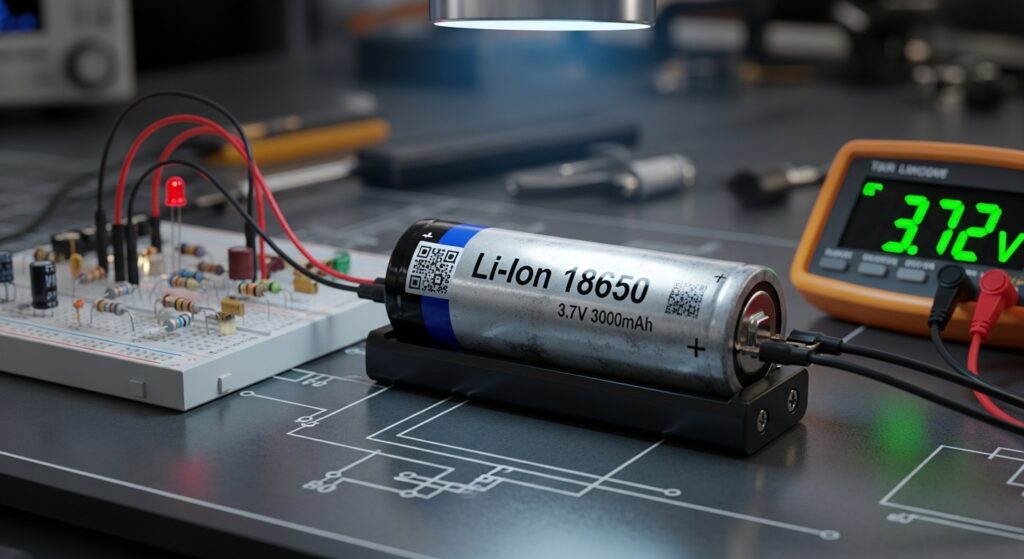
Introduction: The Safety Gatekeeper for the Energy Revolution
Lithium-ion (Li-ion) batteries are the powerhouse of the modern economy, fueling everything from consumer electronics and electric vehicles (EVs) to grid storage and industrial robotics. Their unparalleled energy density, however, introduces unique and significant safety hazards, primarily the risk of thermal runaway, fire, and explosion.
Consequently, the path to market for any product containing a Li-ion battery—whether a single cell or a complex, multi-cell pack—is strictly governed by a complex matrix of international regulations and industry standards. For manufacturers and the accredited contract laboratories that serve them, testing is not optional; it is a non-negotiable requirement for legal transportation, product safety, and commercial viability.
This technical guide delves into the essential global testing standards, differentiating between transport requirements and product safety, and outlines the critical role of specialized laboratories in ensuring compliance and mitigating catastrophic risk.
Part I: The Non-Negotiable Barrier to Entry – UN 38.3 Transportation Testing
Before a Li-ion battery or any device containing it can be shipped by air, sea, rail, or road, it must pass the mandated UN Manual of Tests and Criteria, Part III, Subsection 38.3 (UN 38.3). This standard ensures that batteries can withstand the extreme environmental and mechanical stresses encountered during transport without posing a danger. Compliance is required globally for shipping and is enforced by regulatory bodies like the International Air Transport Association (IATA) and the International Maritime Dangerous Goods (IMDG) Code.
The UN 38.3 testing regime is a comprehensive series of eight sequential tests (T.1 through T.8) performed on both cell and battery pack samples.
The Eight Core UN 38.3 Tests:
| Test Code | Description | Objective and Methodology |
|---|---|---|
| T.1 Altitude Simulation | Simulating low-pressure conditions during air transport. | Tests for leakage or venting at simulated high altitude (pressure 11.6 kPa, temperature 20°C +/- 5°C) for six hours. |
| T.2 Thermal Test | Simulating extreme temperature changes in transport. | Tests stability across rapid, severe temperature cycling (minimum -40°C to +75°C) for 12 hours at each extreme, for a total of 10 cycles. |
| T.3 Vibration | Simulating road/air/sea transport vibrations. | Subjects batteries to intense sinusoidal vibrations across three orthogonal axes for three hours per axis to simulate continuous agitation. |
| T.4 Shock | Simulating rough handling or drops. | Applies a half-sine shock pulse (150 g peak acceleration) in three orthogonal directions (3 pulses in each direction) to simulate impact. |
| T.5 External Short Circuit | Simulating accidental terminal contact outside the device. | The battery is shorted at 55°C +/- 2°C, and the cell/battery must not reach a case temperature exceeding 170°C, disassemble, rupture, or catch fire. |
| T.6 Impact (Cell Only) | Simulating internal cell damage. | Individual cells are subjected to impact using a 9.1 kg mass dropped from a height, or crushed between two parallel plates (crush test). |
| T.7 Overcharge (Battery Only) | Simulating charging malfunctions. | The battery is charged at two times the manufacturer’s recommended current. It must remain stable and not ignite or rupture. |
| T.8 Forced Discharge (Cell Only) | Simulating internal cell instability. | Cells are discharged below zero voltage to assess stability when reverse-polarized. |
A successful UN 38.3 test results in a Test Summary Report, a mandatory document required by global freight carriers and regulators to prove the battery is safe for transport. Without this certification, shipping the product legally is impossible.
Part II: Product Safety and Performance Standards (IEC and UL)
Beyond transportation, product manufacturers are required to prove that the cell or battery pack is safe for consumer, medical, or industrial use. This involves adherence to product-specific standards that test performance and device abuse tolerance.
IEC 62133-2: Global Safety for Portable Applications
The IEC 62133-2 (International Electrotechnical Commission) standard is the most widely recognized international benchmark for the safe operation of secondary (rechargeable) Li-ion cells and batteries in portable applications. It is often a key requirement for obtaining the European CE Mark and compliance with regional standards in Asia and other global markets.
IEC 62133-2 testing includes several critical safety and performance evaluations:
- Safety Tests: External short circuit, incorrect installation, overcharging, forced discharge, cell crushing, and thermal abuse.
- Performance Tests: Vibrate, mechanical shock, low-pressure simulation (similar to UN 38.3 but often stricter limits), and cycling to check capacity retention.
The primary goal of IEC 62133 is to ensure that under reasonable conditions of normal use, foreseeable misuse, and abnormal conditions, the battery does not present hazards such as fire, explosion, or leakage.
UL Standards: North American Safety Benchmarks
Underwriters Laboratories (UL) standards are vital for the North American market, often serving as a primary safety requirement for insurers, retailers, and end-user contracts. The standard applied depends on the level of assembly:
- UL 1642 (Cells): This standard is specific to the safety of individual cells and is one of the most rigorous cell-level safety standards globally. It focuses on isolating the risk of a single cell failure by including intense abuse tests such as projectile, forced-internal short circuit, and crushing.
- UL 2054 (Battery Packs): This standard addresses the safety of the entire battery pack or system (which contains the cells, enclosure, and Battery Management System or BMS). UL 2054 includes electrical tests (e.g., simulated fault conditions), mechanical stress tests, environmental exposure tests, and fire exposure tests to validate the safety features of the entire integrated system.
For devices intended for use in large-scale energy storage or electric vehicles, testing extends to standards like UL 1973 (stationary energy storage) and UL 2271 (light EV applications), which layer additional requirements for structural integrity, fire propagation prevention, and communications protocol integrity.
Part III: Advanced Abuse and Performance Validation
Modern Li-ion battery packs are highly sophisticated energy systems. Compliance testing must therefore extend beyond basic regulatory safety to include advanced performance validation and failure analysis crucial for product durability and consumer trust.
Thermal Runaway and Propagation Testing
The ultimate risk for Li-ion batteries is thermal runaway, an uncontrolled self-heating reaction that generates heat and flammable gas. Advanced testing uses specialized equipment, such as Accelerating Rate Calorimeters (ARC) or Thermal Hazard Technology (THT) calorimeters, to measure the precise temperature threshold and rate of heat generation that triggers runaway.
For multi-cell packs, thermal propagation testing is critical. This verifies that a thermal event in one cell does not spread to adjacent cells, preventing system-wide fire. Laboratories can simulate internal failure conditions to determine the efficacy of proprietary firewalls, thermal shielding, and cooling systems integrated into the battery pack design.
Cycle Life and Capacity Retention
While safety is paramount, performance dictates market success. Cycle life testing assesses the battery’s longevity by subjecting it to thousands of charge and discharge cycles under varying load and temperature conditions. This verifies manufacturer claims regarding product lifespan.
- Capacity Fade: Monitoring the drop in available capacity over time (e.g., confirming the battery retains 80% of its initial capacity after 500 cycles).
- Rate Performance: Testing how well the battery performs under high-current discharge (high C-rate) scenarios, crucial for applications requiring rapid power bursts.
These performance metrics require complex, multi-channel cyclers and battery testing systems capable of precise current and voltage control over extended periods.
Battery Management System (BMS) Verification
The Battery Management System (BMS) is the brain of the battery pack, controlling charging, balancing, and providing critical fault protection (over-voltage, under-voltage, over-current, over-temperature). A contract laboratory specializing in Li-ion systems will test the BMS’s robustness and accuracy against its technical specification and often against functional safety standards like ISO 26262 (for automotive applications). This verifies that the safety cut-off mechanisms trigger correctly and reliably before a dangerous condition is reached.
Part IV: The Contract Laboratory’s Role in Compliance
Given the complexity, high energy density, and regulatory scrutiny surrounding Li-ion technology, the partnership with an accredited contract laboratory is indispensable.
Technical Expertise and Accreditation
Li-ion battery testing requires significant capital investment in specialized equipment (calorimeters, vibration tables, crush machines) and, crucially, expertise in handling high-power, high-risk testing procedures. A leading contract laboratory will hold ISO/IEC 17025 accreditation specifically scoped for battery and abuse testing, guaranteeing data quality, traceable calibration, and internationally recognized results.
Simplified Global Market Access
By utilizing a single, accredited contract laboratory, manufacturers can often bundle UN 38.3, IEC 62133-2, and UL 2054 testing into a single, cohesive program. This streamlines the documentation process, minimizes turnaround time, and reduces the complexity of navigating simultaneous international compliance requirements. The laboratory serves as a single regulatory point of contact, issuing reports that are accepted by global certification bodies and customs agencies.
Conclusion: Data-Driven Safety and Performance
Lithium-ion battery testing is a rigorous technical discipline that separates safe, reliable, and marketable products from regulatory and safety liabilities. Compliance is a multi-layered process, starting with the fundamental transport safety of UN 38.3 and extending through stringent product safety requirements like IEC 62133 and UL 1642/2054. The accuracy of this data is dependent on the specialized equipment and technical proficiency of an accredited contract laboratory. Investing in comprehensive, third-party testing is the manufacturer’s best defense against catastrophic failure and their surest route to global market acceptance.
If your organization requires certified Lithium-ion battery testing, including UN 38.3, IEC, UL, or advanced abuse and performance analysis, submit your testing request today and connect with our network of accredited battery testing laboratories.