
Last Updated: May 7, 2026 — Added: 3Rs principle, ex vivo as third testing category, OECD validated in vitro alternatives, NAMs (organoids/organ-on-a-chip/FDA 2025 Roadmap), EU Directive 2010/63/EU, cosmetics animal testing ban, ADME/IVIVE drug development, in vitro model hierarchy, comparison table, FAQ.
Introduction: Three Testing Paradigms, One Goal
In vivo, in vitro, and ex vivo — the three Latin-derived terms that organize all experimental biology and preclinical testing — describe not just where experiments are conducted but the scientific tradeoffs researchers and regulatory scientists navigate when designing studies to understand how biological systems respond to drugs, chemicals, pathogens, environmental exposures, and other interventions.
In vivo (“in the living”) tests occur within intact living organisms. In vitro (“in glass”) tests occur on isolated biological components — cells, tissues, proteins — outside a living organism. Ex vivo (“out of the living”) occupies the middle ground: tissues or organs removed from a living organism and tested while still metabolically active outside it. Each paradigm has different scientific validity, regulatory acceptance, ethical implications, and commercial applications — and the relative importance of in vitro and ex vivo approaches has grown dramatically as regulatory agencies globally have formalized the commitment to replacing and reducing animal experimentation under the 3Rs framework.
ContractLaboratory.com connects pharmaceutical companies, chemical manufacturers, cosmetics developers, CROs, and academic researchers with pharmacology and drug development laboratories, toxicology and biocompatibility testing specialists, and biology and life sciences testing facilities for the full range of in vivo, in vitro, and ex vivo studies.
The 3Rs: The Ethical and Regulatory Framework for All Animal Testing
The 3Rs principle — Replace, Reduce, Refine — is the foundational framework governing the use of animals in scientific research globally. Formulated by British scientists William M.S. Russell and Rex L. Burch in their 1959 work The Principles of Humane Experimental Technique, the 3Rs have become the operational ethics standard mandated by law across the European Union, United States, UK, Canada, Australia, Japan, and all OECD member states:
- Replace: Use alternative methods — in vitro cell-based assays, ex vivo tissue models, computational models, organoids — wherever scientifically feasible in place of animal experiments. The goal of full replacement is the long-term regulatory ambition.
- Reduce: Minimize the number of animals used by improving experimental design, using statistical methods to plan appropriate sample sizes, sharing data, and using methods that generate more information per animal used.
- Refine: When animal experiments are conducted, minimize pain, suffering, distress, and lasting harm through improved husbandry, analgesia, humane endpoints, and refined procedures.
The 3Rs are not merely aspirational — they are legally mandated. EU Directive 2010/63/EU on the protection of animals used for scientific purposes requires all EU member states to ensure that animal experiments may only be authorized if no alternative method is available and the expected benefits outweigh potential animal suffering. The Directive mandates that all research institutions apply the 3Rs and that regulators actively promote the development and validation of alternative methods. Directive 2010/63/EU explicitly states its aim of full replacement of animal procedures with non-animal methods as the long-term objective.
In the United States, the Animal Welfare Act (AWA) and the PHS Policy on Humane Care and Use of Laboratory Animals both require 3Rs implementation through Institutional Animal Care and Use Committees (IACUCs). FDA’s Modernization Act 2.0 (signed December 2022) amended the Federal Food, Drug, and Cosmetic Act to remove the requirement for animal testing prior to human drug trials — for the first time explicitly allowing FDA-approved drug applications without animal safety data where validated non-animal methods are available.
In Vivo, Ex Vivo, and In Vitro: Quick Reference Comparison
| Characteristic | In Vivo | Ex Vivo | In Vitro |
| Definition | Experiments in an intact living organism (human, animal, plant) | Tissues, organs, or fluids removed from a living organism and tested outside, while still metabolically active | Experiments on isolated cells, proteins, or biomolecules in a controlled laboratory environment |
| Latin meaning | “Within the living” | “Out of the living” | “In glass” |
| Physiological complexity | Highest — full systemic interactions, metabolism, immune response, pharmacokinetics | Medium — preserves tissue architecture and short-term metabolic function; lacks systemic circulation | Lowest (2D monolayer) to Medium (organoids, organ-on-a-chip); lacks full systemic context |
| Common examples | Rodent PK/PD studies; mouse tumor xenograft models; non-human primate toxicology; zebrafish developmental assays; clinical trials (human in vivo) | Skin permeation (Franz cell / excised skin); isolated perfused liver/heart; precision-cut liver slices; ex vivo receptor binding; brain slice electrophysiology | Cell viability assays (MTT, CellTiter-Glo); Ames test; cytochrome P450 inhibition; microsomal clearance; reconstructed human epidermis (RhE); reporter gene assays; ELISA; Western blot |
| Regulatory acceptance | Mandated by ICH S1–S7 for pharmaceuticals; OECD TGs for chemicals; required for clinical trial IND enabling studies | Accepted for specific applications (OECD TG 428 skin absorption; hepatocyte/liver slice metabolic studies); often supplementary to in vitro or in vivo | OECD TG 431/439/442/471/487 and others are accepted as standalone alternatives; increasingly accepted for complete regulatory packages via NAM strategy |
| 3Rs alignment | Subject to 3Rs requirements; mandated Reduce and Refine; Replace sought wherever alternatives validated | Generally reduces animal numbers (one animal yields many ex vivo samples); Refinement possible | Primary tool for Replacement; addresses ethical concerns; high-throughput screening possible |
| Limitations | Ethical concerns; high cost; species translation issues (~90% of drug candidates fail in humans despite passing animal studies); regulatory scrutiny | Short tissue viability window (hours-days); requires live animals for tissue donation; technically demanding; limited to specific endpoint types | Limited systemic complexity; 2D cultures miss organ architecture; may not predict in vivo toxicity/efficacy without IVIVE extrapolation |
In Vivo Testing: Principles, Applications, and Drug Development Context
In vivo testing involves experiments conducted within a living organism — the most physiologically comprehensive approach because all systemic interactions, metabolic pathways, immune responses, pharmacokinetic processes, and multi-organ effects occur simultaneously under normal physiological conditions.
Common In Vivo Testing Models
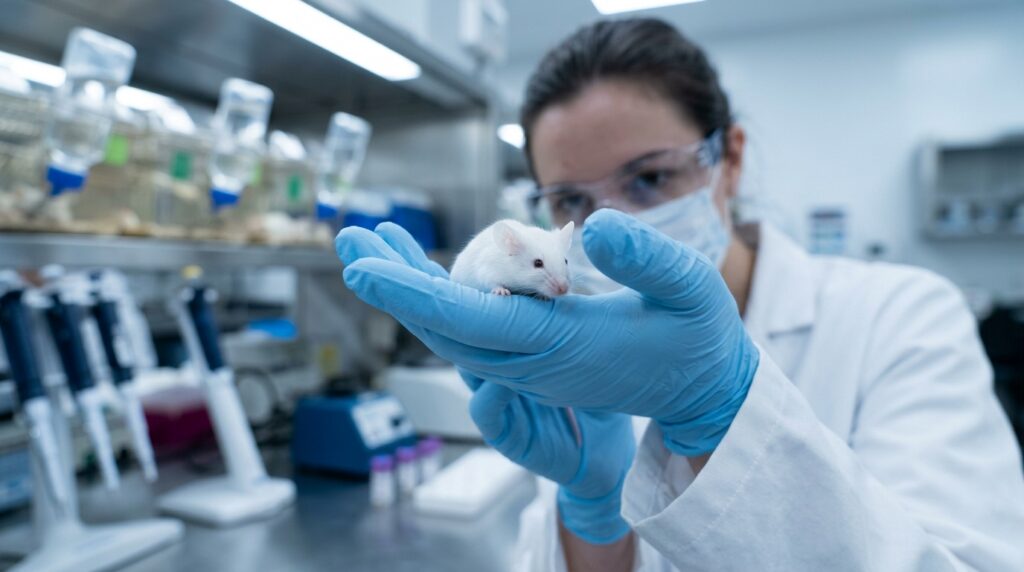
- Rodent models (mice and rats): The most widely used in vivo test systems. Mice (Mus musculus) and rats (Rattus norvegicus) are used for the majority of preclinical pharmaceutical safety testing, efficacy studies, and mechanism-of-action research. Transgenic and knockout models (genetically engineered mice with specific genes inserted or deleted) allow targeted study of disease pathways and drug targets.
- Non-human primates (NHPs): Macaques and marmosets are used for specific pharmacological studies where rodent models are insufficient — particularly for biologics (monoclonal antibodies, gene therapies) that are cross-reactive only in primates. NHP studies are the most strictly regulated and ethically scrutinized, used only when no alternative exists and with specific IACUC/ethics board approval.
- Zebrafish (Danio rerio): An emerging model that bridges in vitro and in vivo — zebrafish embryos/larvae are optically transparent, amenable to high-throughput screening, and respond to chemical exposures in ways reflecting vertebrate biology. Because zebrafish embryos before 5 days post-fertilization are not protected under EU Directive 2010/63/EU in most EU member states, they occupy a unique regulatory position as a potential “replacement” model in some contexts.
- Other species: Dogs (cardiovascular and GI studies), pigs (dermal and surgical models), rabbits (Draize eye/skin tests — increasingly replaced by in vitro alternatives), Drosophila (genetics), and C. elegans (toxicity/aging screens).
In Vivo Applications in Drug Development: ADME, PK/PD, and IND-Enabling Studies
The pharmaceutical drug development pipeline requires specific in vivo data packages before human clinical trials may begin. The preclinical drug development phase includes:
- ADME studies (Absorption, Distribution, Metabolism, Excretion): In vivo ADME studies quantify how a drug compound is absorbed into the body, distributed to tissues, metabolized by enzymes (primarily CYP450 enzymes in the liver), and eliminated (renal, biliary, or fecal excretion). ADME data are essential for predicting human pharmacokinetics, identifying metabolites (including potential toxic metabolites), and designing dosing regimens.
- Pharmacokinetic (PK) / Pharmacodynamic (PD) studies: PK studies measure drug concentration in blood and tissues over time; PD studies measure the biological effect (biomarker response, receptor occupancy, tumor volume change) at each drug concentration. PK/PD relationships provide the quantitative linkage between drug exposure and effect that guides clinical dose selection. First-in-human (FIH) dose selection for Phase I clinical trials is based primarily on in vivo animal PK/PD data.
- General toxicology: Single-dose (acute toxicity), repeat-dose (28-day, 90-day, 6-month, chronic) toxicology studies in at least two species establish the maximum tolerated dose, target organs of toxicity, dose-response relationships, and safety margins — the data required for FDA/EMA IND (Investigational New Drug)/CTA (Clinical Trial Authorization) enabling packages.
- Genotoxicity (in vivo): The in vivo micronucleus test (OECD TG 474) and in vivo Comet assay (OECD TG 489) are used when in vitro genotoxicity results are positive or equivocal, and are required for regulatory submissions for most pharmaceuticals per ICH S2(R1).
- Carcinogenicity studies (OECD TG 451–453): Long-term (24-month) rodent studies for pharmaceuticals intended for chronic human use. ICH S1 guidance governs when carcinogenicity studies are required and provides frameworks for alternative approaches including in vitro and computational methods.
The Translation Problem: Why Animal Data Doesn’t Always Predict Human Response
Despite the physiological richness of in vivo testing, there is a fundamental limitation: species differences mean that animal results frequently don’t translate to humans. Approximately 90% of drug candidates that pass preclinical animal safety and efficacy testing go on to fail in human clinical trials — primarily due to unexpected human toxicity or lack of efficacy. This translational failure represents hundreds of billions of dollars in wasted pharmaceutical investment annually and is the primary scientific driver for developing more human-relevant in vitro alternatives, including organoids and organ-on-a-chip systems derived from human cells.
Ex Vivo Testing: The Bridge Between In Vitro and In Vivo
Ex vivo testing removes tissues, organs, or biological fluids from a living organism and places them in a controlled external environment where they remain metabolically active for a limited period. Ex vivo preparations retain more tissue architecture and cellular complexity than simple in vitro cultures, while avoiding the full systemic complexity of in vivo experiments. They are valuable when studying tissue-level pharmacology, drug metabolism, or toxicology in isolation from systemic confounders.
- Skin permeation testing (OECD TG 428): Excised human or animal skin (pig skin is anatomically similar to human skin) is mounted in Franz diffusion cells — a two-chamber apparatus where the skin separates a donor compartment (containing the test substance) from a receptor compartment (containing saline or buffer). Drug permeation through the skin into the receptor fluid is measured over time, providing permeability coefficients (Kp) and cumulative permeation profiles used in transdermal drug delivery development, dermal risk assessment, and cosmetic ingredient safety assessment.
- Isolated perfused organ preparations: Intact organs (heart, kidney, liver, lung) are removed from an animal and perfused with oxygenated buffer solution through their native vascular system. Isolated perfused liver preparations allow measurement of hepatic clearance, drug metabolite formation, and biliary excretion without interference from extrahepatic metabolism. Isolated perfused heart preparations (Langendorff preparation) allow cardiac pharmacology and safety pharmacology measurements under controlled conditions.
- Precision-cut liver slices (PCLS): Liver slices cut to uniform 250–300 μm thickness are incubated with test compounds. PCLS retain the multicellular liver architecture, including hepatocytes, Kupffer cells (resident macrophages), stellate cells, and biliary epithelial cells — providing more physiologically relevant drug-induced liver injury (DILI) predictions than hepatocyte monolayer cultures.
- Ex vivo receptor binding and brain slice preparations: For neuropharmacology, brain slices prepared from freshly sacrificed animals allow electrophysiological and pharmacological measurements of synaptic transmission, receptor pharmacology, and drug effects on neural circuits — maintaining near-physiological tissue architecture.
- Human ex vivo tissue: Surgical waste tissue (skin, liver biopsies, intestinal resections) from consenting human patients provides the most human-relevant ex vivo material for drug absorption, metabolism, and toxicology studies. Human ex vivo skin is the gold standard for transdermal permeation studies for cosmetic and pharmaceutical applications.
In Vitro Testing: Models, Applications, and the Hierarchy of Complexity
In vitro testing encompasses experiments performed on isolated biological components — cells, proteins, tissues, microorganisms — in a controlled laboratory environment outside a living organism. The term covers an enormous range of model complexity, from single-enzyme inhibition assays to self-organizing three-dimensional organ replicas, and is the primary arena for both the greatest current innovation in biomedical testing and the strongest regulatory momentum toward animal-free science.
The In Vitro Complexity Hierarchy
- 2D monolayer cell culture: Cells grown as a single layer on a flat plastic or glass surface — the simplest and most widely used in vitro model. Rapid, inexpensive, and amenable to high-throughput screening (HTS) of thousands of compounds simultaneously. Major limitation: cells lose many tissue-specific phenotypic characteristics when grown in 2D, and the model lacks tissue architecture, oxygen/nutrient gradients, and cell-cell/cell-matrix interactions present in tissues. Common established cell lines: HeLa (human cervical cancer), HEK293 (human embryonic kidney), CHO (Chinese hamster ovary — used for recombinant protein production and receptor pharmacology), Caco-2 (intestinal epithelial — for drug absorption studies), HepaRG (human hepatocyte-like — for metabolism and hepatotoxicity).
- 3D spheroids and tumoroids: Multicellular aggregates that self-assemble into three-dimensional structures when cells are grown on ultra-low attachment surfaces or in hanging drops. 3D spheroids develop oxygen and nutrient gradients similar to solid tumors (necrotic core, hypoxic middle zone, proliferating outer layer), providing more physiologically relevant drug response predictions for oncology applications. Tumoroids derived from patient-derived tumor cells enable personalized medicine drug sensitivity testing.
- Primary cells: Freshly isolated cells from animal or human tissue that have not been passaged extensively. More physiologically relevant than immortalized cell lines because they retain tissue-specific gene expression and metabolic function, but have limited lifespan in culture (typically days to weeks) and batch-to-batch variability. Human primary hepatocytes are the gold standard for in vitro drug metabolism studies.
- Induced pluripotent stem cells (iPSCs) and iPSC-derived organotypic models: iPSCs — adult somatic cells reprogrammed to a pluripotent state — can be differentiated into virtually any cell type, including cardiomyocytes, hepatocytes, neurons, and kidney tubular cells. iPSC-derived cells provide human-specific responses and can be generated from patients with specific genetic backgrounds for disease modeling and toxicogenomics.
- Reconstructed human tissue models (for regulatory OECD testing): Three-dimensional, multilayered human tissue models constructed from primary human keratinocytes. Reconstructed Human Epidermis (RhE) models (EpiDerm™, SkinEthic™, epiCS®, LabCyte EPI-MODEL) are validated in OECD TG 431 (skin corrosion) and OECD TG 439 (skin irritation) as accepted replacements for the Draize rabbit skin test. Reconstructed human cornea-like epithelium (RhCE) models are validated in OECD TG 492 for eye irritation assessment, replacing the Draize rabbit eye test.
Organoids: Miniature Organs in a Dish
Organoids are self-organizing, three-dimensional structures derived from stem cells (adult tissue stem cells or iPSCs) that recapitulate the cellular composition, architecture, and functional properties of specific organs. Unlike simple spheroids, organoids contain multiple cell types organized in spatial relationships mimicking the organ of origin. The organoid field has exploded since Clevers and colleagues first published intestinal organoid protocols (2009), with validated organoid models now available for the intestine, liver, lung, kidney, pancreas, brain (cerebral organoids), stomach, and tumor tissue from virtually any cancer type.
The global organoid market was valued at approximately $1.4 billion in 2025 and is projected to reach $4.0 billion by 2035 (CAGR ~10.7%). Applications: drug toxicity and efficacy screening; personalized medicine (patient-derived organoids for individual drug sensitivity testing); disease modeling (CFTR mutations in cystic fibrosis lung organoids; SARS-CoV-2 infection in lung and intestinal organoids); gene therapy validation.
Organ-on-a-Chip: Microfluidic Organ Simulation
Organ-on-a-chip (OoC) devices are microfluidic platforms containing living human cells arranged in channels that mimic the microenvironment of specific organs — with physiologically relevant fluid flow, mechanical forces (e.g., cyclic stretch mimicking lung breathing motions), and multi-cellular interactions. Individual chips can be linked in series to create multi-organ-on-a-chip systems (“body-on-a-chip”) that model drug absorption (gut chip), first-pass metabolism (liver chip), distribution, and toxicity in downstream organs — addressing the major limitation of single-organ in vitro systems.
The organ-on-a-chip market was valued at approximately $157 million in 2024 and is projected to reach $952 million by 2030 (CAGR ~35%). FDA’s CDER has explicitly recognized organ-on-a-chip data in drug development contexts, and the 2025 FDA Roadmap to Reducing Animal Testing specifically identifies organ-on-a-chip as a priority NAM platform.
OECD Validated In Vitro Alternative Test Guidelines
The OECD Test Guidelines Programme provides internationally validated, regulatory-accepted test methods for human health and environmental hazard assessment. The following OECD TGs represent validated in vitro alternatives to in vivo animal tests that are now accepted by regulatory agencies in all OECD member states:
- OECD TG 431 (Skin Corrosion, In Vitro): Uses reconstructed human epidermis (RhE models) to identify skin corrosives, replacing the rabbit skin corrosion test. Validated models: EpiDerm™ SCT, EpiCS® SCT, SkinEthic™ RHE, and others.
- OECD TG 439 (Skin Irritation, In Vitro): Uses RhE models to identify non-corrosive skin irritants, replacing the Draize rabbit skin irritation test. Same validated RhE models as TG 431.
- OECD TG 437 / TG 460 / TG 492 (Eye Irritation, In Vitro): Multiple tiered in vitro approaches replacing the Draize rabbit eye test. TG 437 uses the Bovine Corneal Opacity and Permeability (BCOP) test; TG 492 uses reconstructed human cornea-like epithelium (RhCE) models.
- OECD TG 442C/D/E (Skin Sensitization, In Vitro/In Chemico): An integrated approach replacing the guinea pig maximization test (GPMT, OECD TG 406) and mouse Local Lymph Node Assay (LLNA, OECD TG 429). TG 442C = Direct Peptide Reactivity Assay (DPRA, in chemico); TG 442D = ARE-Nrf2 Luciferase Test Method (KeratinoSens); TG 442E = h-CLAT (human Cell Line Activation Test). No single in vitro assay fully replaces the LLNA alone — these three are used in a defined approach/Integrated Approaches to Testing and Assessment (IATA) framework.
- OECD TG 471 (Bacterial Reverse Mutation Test / Ames Test, In Vitro): The standard in vitro mutagenicity screening test using five Salmonella and E. coli strains. Part of the core ICH S2(R1) genotoxicity battery for pharmaceuticals.
- OECD TG 473 (Chromosome Aberration, In Vitro): Detects structural chromosomal aberrations in cultured mammalian cells. Part of the ICH S2(R1) in vitro genotoxicity battery.
- OECD TG 487 (Micronucleus Test, In Vitro): Detects micronuclei (fragments of chromosomes or whole chromosomes) in cultured mammalian cells. Increasingly preferred over TG 473 because it detects both structural and numerical chromosomal aberrations.
- OECD TG 428 (Skin Absorption, In Vitro): Uses excised human or animal skin in Franz diffusion cells to measure transdermal penetration of chemicals. Accepted for risk assessment of dermal exposures to pesticides, cosmetic ingredients, and industrial chemicals.
New Approach Methodologies (NAMs): The Future of Non-Animal Testing
New Approach Methodologies (NAMs) is the regulatory term encompassing all non-animal testing approaches being developed and validated as alternatives to animal studies. NAMs include: in vitro cell-based assays (the classic in vitro methods above); advanced in vitro models (organoids, organ-on-a-chip, 3D spheroids); in silico/computational approaches (QSAR models — Quantitative Structure-Activity Relationships; PBPK — Physiologically Based Pharmacokinetic modeling; machine learning toxicity prediction); high-throughput screening; Adverse Outcome Pathways (AOPs — mechanistic frameworks linking molecular initiating events to adverse outcomes via key events); and Integrated Approaches to Testing and Assessment (IATA — structured frameworks combining multiple NAMs to address specific regulatory endpoints).
Key Regulatory Developments in NAMs (2022–2025)
- FDA Modernization Act 2.0 (December 2022): Amended the Federal Food, Drug, and Cosmetic Act to remove the explicit requirement for animal testing prior to human drug trials. FDA may now accept NAM-based IND (Investigational New Drug) packages that demonstrate adequate safety characterization without animal data.
- FDA Roadmap to Reducing Animal Testing in Preclinical Safety Studies (2025): FDA’s agency-wide strategy document outlining how CDER will promote NAMs, including AI-based computational modeling, human organoids, and organ-on-a-chip, to phase down animal testing. FDA CDER published its inventory of drug development contexts where streamlined (reduced animal) nonclinical programs are acceptable.
- EMA JEG 3Rs (European Medicines Agency Joint Expert Group on 3Rs): EMA’s working party promoting best practice in 3Rs implementation for regulatory testing of medicinal products. Published biennial reports on NAM integration progress across EU member states.
- EURL ECVAM (EU Reference Laboratory for Alternatives to Animal Testing): Located at the Joint Research Centre (JRC) in Ispra, Italy, EURL ECVAM validates in vitro alternative methods and submits them to OECD for international acceptance. EURL ECVAM maintains the EURL ECVAM Search Guide for existing alternatives (ESAC) and the EURL ECVAM Database service on Alternative Methods (DB-ALM).
- EU Chemicals legislation — REACH and alternatives: EU REACH Regulation (Regulation (EC) No 1907/2006) requires hazard assessment for all chemicals placed on the EU market, but promotes in vitro and computational approaches to reduce animal testing while maintaining safety. ECHA has issued guidance on the use of alternative methods in REACH dossiers.
- Cosmetics animal testing ban — EU 2013: The EU cosmetics regulation (Regulation (EC) No 1223/2009) banned animal testing for cosmetic products and cosmetic ingredients from March 2013 and prohibited the marketing in the EU of cosmetics tested on animals anywhere in the world. This ban — the most comprehensive cosmetics animal testing prohibition globally — has driven 15+ years of intensive in vitro cosmetics safety test development and OECD validation activity, producing the battery of validated RhE, skin sensitization, and phototoxicity in vitro test methods now widely adopted.
IVIVE: Bridging In Vitro and In Vivo Data
In vitro-to-in vivo extrapolation (IVIVE) is the quantitative science of predicting in vivo biological responses from in vitro measurements — using mathematical scaling factors, protein binding corrections, and Physiologically Based Pharmacokinetic (PBPK) models. IVIVE is central to modern toxicology and pharmaceutical development for several reasons:
- Hepatic clearance prediction: In vitro intrinsic clearance from human liver microsomes or hepatocytes is scaled using liver weight, microsomal protein content, and hepatocellularity factors to predict in vivo hepatic clearance — enabling estimation of human drug half-life and dosing interval without animal PK studies.
- Toxicokinetic modeling: In vitro concentration-response relationships are combined with PBPK models to predict tissue concentrations in vivo, supporting risk assessment without animal toxicokinetic studies.
- PBPK models: Physiologically Based Pharmacokinetic models mathematically describe drug ADME using tissue volumes, blood flow rates, partition coefficients, and metabolic parameters — enabling extrapolation between species (animal to human), routes of exposure (oral to inhalation), and exposure scenarios. FDA and EMA both accept PBPK models in regulatory submissions.
Finding In Vivo, Ex Vivo, and In Vitro Testing Laboratories
The choice between in vivo, ex vivo, and in vitro testing is not simply a scientific question — it is also a regulatory strategy question, an ethical responsibility, and increasingly a commercial differentiator as regulatory agencies worldwide formalize the 3Rs and NAM integration. Pharmaceutical companies, chemical manufacturers, cosmetics developers, food companies, pesticide producers, and medical device manufacturers all require testing laboratories with the specific capabilities, regulatory experience (GLP compliance, ICH/OECD method validation), and accreditation appropriate to their testing needs.
ContractLaboratory.com connects research organizations and industry sponsors with specialized pharmacology and drug development laboratories, toxicology and biocompatibility testing specialists, and biology and life sciences testing facilities for the full range of in vivo, ex vivo, and in vitro studies. Related resources: preclinical drug development testing and biopharmaceutical potency testing.
Frequently Asked Questions About In Vivo and In Vitro Testing
In vivo testing (“within the living”) involves experiments conducted inside an intact living organism — a whole animal or human subject. Examples include animal pharmacology studies, clinical trials, and toxicology studies in rodents. In vitro testing (“in glass”) involves experiments performed on isolated biological components — cells, proteins, tissues, microorganisms — outside a living organism in a laboratory environment, such as in a Petri dish, test tube, or multi-well plate. Examples include cell viability assays, the Ames mutagenicity test, enzyme inhibition assays, and organoid drug testing. Ex vivo testing (“out of the living”) occupies a middle position: tissues or organs are removed from a living organism and placed in a controlled external environment where they remain metabolically active for a limited period. Examples include skin permeation studies in Franz diffusion cells (using excised human or pig skin), isolated perfused liver preparations, and precision-cut liver slices. Each approach offers different levels of physiological complexity and regulatory applicability.
The 3Rs principle — Replace, Reduce, Refine — is the foundational ethical framework for the use of animals in scientific research, formulated by William M.S. Russell and Rex L. Burch in 1959. Replace means using alternative methods (in vitro models, computational approaches, organoids) instead of animal experiments wherever scientifically feasible. Reduce means minimizing the number of animals used through improved experimental design, statistical planning, and data sharing. Refine means improving procedures to minimize suffering, pain, and distress in animals that are used. The 3Rs are legally mandated by EU Directive 2010/63/EU across all European Union member states, by the US Animal Welfare Act and PHS Policy, and effectively by all OECD member state legislation. The principle underpins all regulatory guidance on testing alternatives — from OECD validated in vitro test guidelines to FDA’s 2025 Roadmap to Reducing Animal Testing. The long-term regulatory objective, explicit in EU Directive 2010/63/EU, is the full replacement of animal procedures with non-animal alternatives as validated methods become available.
New Approach Methodologies (NAMs) is the regulatory term for modern non-animal testing methods being integrated into pharmaceutical, chemical, and cosmetics safety assessment. NAMs include: advanced in vitro models (organoids, organ-on-a-chip, 3D spheroids, reconstructed human tissue); in silico computational methods (QSAR structure-activity models, PBPK pharmacokinetic modeling, machine learning toxicity prediction); high-throughput screening (testing thousands of compounds simultaneously in miniaturized assays); Adverse Outcome Pathway (AOP) frameworks; and Integrated Approaches to Testing and Assessment (IATA). Major regulatory developments include: FDA Modernization Act 2.0 (December 2022), which removed the explicit requirement for animal testing before human drug trials; FDA’s 2025 Roadmap to Reducing Animal Testing in Preclinical Safety Studies, which outlines how CDER will promote AI models, organoids, and organ-on-a-chip; and EMA’s JEG 3Rs working party driving NAM integration across EU pharmaceutical regulation. EURL ECVAM in the EU and ICCVAM in the US are the bodies responsible for scientifically validating NAMs before regulatory acceptance.
The OECD Test Guidelines Programme includes multiple validated in vitro alternatives to animal tests. Key examples: OECD TG 431 and TG 439 use reconstructed human epidermis (RhE) models to assess skin corrosion and skin irritation, replacing the rabbit Draize skin test. OECD TG 437, 460, and 492 assess eye irritation using in vitro methods (bovine corneal opacity test; reconstructed human cornea-like epithelium), replacing the rabbit Draize eye test. OECD TG 442C, 442D, and 442E (DPRA, ARE-Nrf2/KeratinoSens, h-CLAT) address skin sensitization hazard identification without the mouse Local Lymph Node Assay. OECD TG 471 (Ames test), 473 (chromosome aberration), and 487 (micronucleus) provide the standard in vitro genotoxicity battery. OECD TG 428 covers in vitro skin absorption using Franz diffusion cells. These methods are accepted by all OECD member state regulatory agencies, including FDA, EMA, ECHA, and Health Canada, either as standalone replacements or as components of tiered testing strategies.
Organoids are self-organizing, three-dimensional structures derived from stem cells that recapitulate the cellular architecture, composition, and function of specific organs. Unlike simple cell cultures, organoids contain multiple cell types organized in physiologically relevant spatial relationships — intestinal organoids have crypt-villus structures; kidney organoids contain tubular segments; brain organoids develop cortical layers. They are derived from either adult tissue stem cells or induced pluripotent stem cells (iPSCs), including patient-derived cells that carry disease-relevant genetic variants. Organoids are used in: drug efficacy and toxicity screening (patient-derived organoids allow testing of multiple drugs to identify the best treatment for an individual); disease modeling (cystic fibrosis, inflammatory bowel disease, cancer); rare disease research; and virus infection studies (SARS-CoV-2 infected lung organoids). The organoid market is valued at approximately $1.4 billion in 2025, projected to reach $4.0 billion by 2035. The FDA’s 2025 Roadmap to Reducing Animal Testing explicitly endorses organoids as a priority New Approach Methodology for preclinical safety assessment.
Despite the growth of validated in vitro alternatives, in vivo testing remains required for several regulatory contexts where no accepted alternative yet exists: repeat-dose systemic toxicity (28-day, 90-day, and chronic toxicology studies evaluating effects on multiple organ systems simultaneously — no in vitro model yet adequately replaces the integrated systemic response of a living organism for these endpoints); carcinogenicity studies (2-year rodent bioassays required by ICH S1 for pharmaceuticals intended for chronic use, though alternative approaches are being developed); reproductive and developmental toxicity (ICH S5 requires in vivo studies for effects on fertility, embryo-fetal development, and pre/postnatal development); in vivo pharmacokinetics (first-in-human dose selection requires in vivo PK data, though PBPK modeling increasingly supplements or reduces required animal studies); and specific safety pharmacology (ICH S7 cardiovascular, respiratory, and CNS safety pharmacology studies in vivo). The regulatory trend across FDA, EMA, and OECD is toward progressive replacement as validated alternatives are accepted — the FDA Modernization Act 2.0 and FDA 2025 Roadmap reflect an active effort to reduce the remaining in vivo requirements.
Conclusion
In vivo, ex vivo, and in vitro testing form a complementary triad that collectively enables researchers and regulatory scientists to characterize the biological activity, safety, and pharmacology of drugs, chemicals, cosmetics, and other biologically active agents. The scientific landscape is shifting rapidly under the combined pressure of the 3Rs ethical framework (legally mandated by EU Directive 2010/63/EU and increasingly reflected in US law through the FDA Modernization Act 2.0), the growing regulatory acceptance of validated OECD in vitro test methods, and the emergence of transformative in vitro model technologies — organoids, organ-on-a-chip, iPSC-derived models — that are progressively narrowing the predictive gap between in vitro experiments and human biology. The FDA’s 2025 Roadmap to Reducing Animal Testing signals that this transition from animal-dependent to predominantly human-cell-based preclinical testing is not aspirational — it is agency policy.
ContractLaboratory.com connects research sponsors with specialized pharmacology and drug development laboratories for GLP-compliant in vivo, ex vivo, and in vitro testing across all regulatory contexts. Submit a testing request or contact our team. partner.