
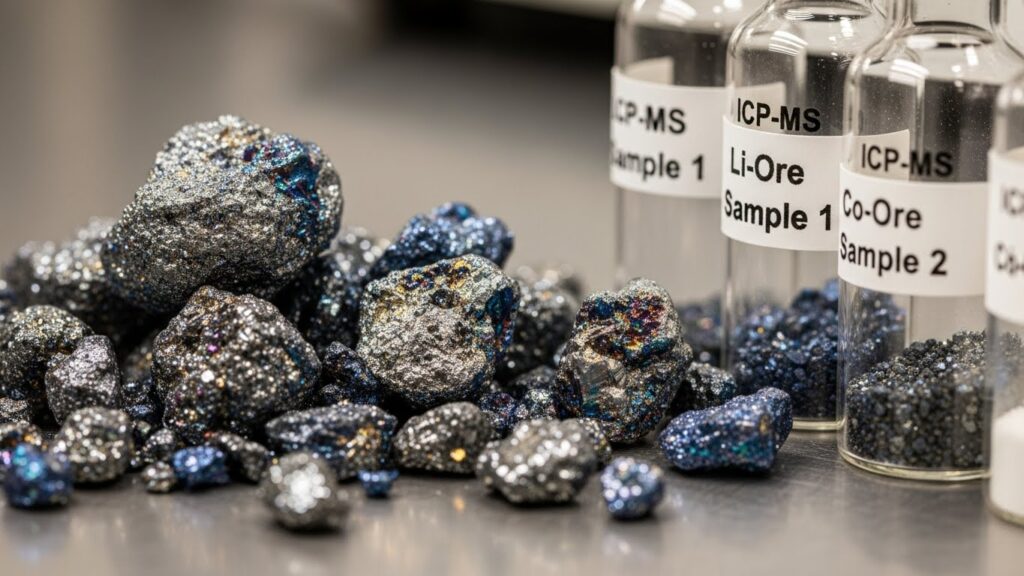
Global mining and metallurgical testing is evolving rapidly as the energy transition accelerates. Demand for critical minerals—including lithium, cobalt, nickel, graphite, and rare earth elements—continues to reshape exploration, processing, and supply chain verification. The International Energy Agency (IEA) reported that lithium demand grew by approximately 30% in 2023, with long-term forecasts through 2040 indicating continued expansion as electric vehicles, grid-scale storage, and clean-energy technologies scale.
For laboratories, these shifts translate into a growing need for rapid, defensible, and audit-ready analytical data. Testing now extends far beyond grade confirmation. It must support ESG disclosures, investor expectations, permitting requirements, and cross-border compliance frameworks. Contract labs are increasingly expected to provide traceability, digital documentation, and method transparency that withstand regulatory, financial, and operational scrutiny.
Core Trends Reshaping Test Menus
1. Critical Mineral Assays for the Energy Transition
The global pivot toward electrification and decarbonization is driving demand for high-accuracy characterization of minerals essential to battery and renewable-energy supply chains. Laboratories must now:
- Provide robust multi-element analysis for lithium, cobalt, nickel, manganese, graphite, niobium, tantalum, and rare earth elements.
- Offer fast turnaround times for exploration drilling campaigns and feasibility studies while maintaining defensibility for regulatory and investor review.
- Implement validated methods, such as ICP-MS, ICP-OES, XRD, and ion chromatography, with rigorous QA/QC protocols to support bankable reporting.
- Address complex matrices like lithium brines, spodumene concentrates, and lateritic nickel ore using specialized sample preparation workflows.
Contract labs that offer scalability, matrix-matched standards, and proficiency-tested methods are increasingly viewed as strategic partners for both junior explorers and large mining houses.
A lot is changing in consumer products, pharmaceuticals and biopharmaceuticals, environmental testing, metals and mining, food and beverage, medical devices, and cross-industry innovations.
If you are a third-party or contract testing lab, you need to know why the sector is shifting, the core trends reshaping test menus and methods, and the recent developments affecting operations, so you can take practical steps now to stay competitive.
Get a sector-by-sector look at the trends shaping laboratory testing in 2025 and beyond. Download the cross-industry playbook for insights into digital readiness and sustainable lab practices.
2. ESG and Sustainability Reporting
Mining companies face heightened expectations related to sustainability metrics, supply chain traceability, and environmental performance. As a result, laboratories now play a critical role in ESG substantiation. This includes:
- Carbon footprint measurements (e.g., carbon intensity per tonne of metal produced).
- Recyclability assessments for secondary materials, scrap metals, and battery materials.
- Trace element and contaminant profiling to support water stewardship, tailings management, and environmental monitoring programs.
- Data packages aligned with frameworks such as the Global Reporting Initiative (GRI), IFRS Sustainability Disclosure Standards, and emerging SEC climate-risk rules.
- Documentation that ensures transparency for downstream manufacturers, including EV battery producers and energy storage system integrators.
Labs that can provide structured, audit-ready data packages—complete with traceable metadata, chain-of-custody documentation, and method accreditation—are becoming indispensable to corporate ESG strategies.
3. Field-to-Lab Digital Threads
Mining operations increasingly rely on hybrid analytics in which field measurements inform rapid decisions and laboratory assays confirm accuracy. To support this ecosystem, laboratories must:
- Integrate portable analytical technologies (pXRF, pLIBS, handheld Raman) into sampling workflows.
- Maintain digital continuity so that field-generated metadata—GPS coordinates, sampling depth, operator ID, environmental conditions—is preserved through the chain of custody.
- Provide digital platforms or APIs that automatically reconcile field measurements with confirmatory laboratory data.
- Ensure that documentation aligns with NI 43-101, JORC, SAMREC, and other international reporting frameworks.
For contract labs, the ability to deliver a seamless field-to-lab data pipeline is becoming a major competitive differentiator, especially for clients operating globally or across remote sites.
Recent Developments Affecting Lab Operations
Several operational shifts are reshaping how testing laboratories support the mining and metals sector:
Rise of Portable Screening Tools
Portable XRF and LIBS instruments are now widely deployed for real-time field characterization. While these tools accelerate decision-making, they also increase the volume of samples requiring confirmatory laboratory analysis via ICP-MS, ICP-OES, or XRD. Labs must be prepared for higher sample throughput, tighter turnaround expectations, and the need to reconcile field vs. lab data.
Regulatory and Compliance Harmonization
Stronger expectations from REACH, the EU Battery Regulation, US critical mineral sourcing rules, and national export control frameworks are driving standardization. Labs must ensure that their test methods, reporting formats, and documentation meet cross-border regulatory requirements, especially for battery-grade materials.
Demand for Bankable Assays
Financing entities—private equity, sovereign funds, and development banks—now require “bankable” assay packages for project feasibility. This has elevated expectations for:
- Accreditation (ISO/IEC 17025)
- Proven QA/QC frameworks
- Round-robin or interlaboratory comparison data
- Transparent method documentation
Contract labs able to deliver defensible results that hold up in audits are increasingly central to mine financing and project valuation exercises.
Practical Steps for Laboratories
To remain competitive and compliant, laboratories should prioritize strategic investments and operational enhancements:
1. Expand and Modernize Analytical Capability
- Implement multi-element workflows suitable for both traditional metals and emerging critical-mineral matrices.
- Adopt flexible platforms—ICP-MS, fusion-XRF, ion chromatography, thermal methods—capable of handling ore, concentrate, brine, tailings, and recycled materials.
2. Digitize Chain of Custody and Data Management
- Use secure LIMS platforms that integrate with field devices and maintain full traceability.
- Standardize metadata capture to support compliance and auditability across geographies.
3. Align Services With ESG and Sustainability Frameworks
- Develop specific testing packages for carbon reporting, water stewardship, tailings monitoring, and material recyclability.
- Provide structured datasets compatible with ESG audit workflows and disclosure requirements.
4. Build Capacity for Market Volatility
- Maintain flexible throughput to handle exploration booms, feasibility-stage surges, and rapid cycling in global demand for battery materials.
- Cross-train staff to support fluctuating test volumes and diverse mineral types.
5. Strengthen Advisory and Interpretive Services
Beyond raw data, clients increasingly seek interpretive insights, method selection guidance, and support for regulatory submissions. Contract labs that provide consultative services gain strategic value in the supply chain.
Where This Leaves the Mining Testing Sector
Metals and mining laboratories are transitioning from traditional analytical service providers to critical partners in the global energy transition. Their role now spans technical assay precision, ESG verification, supply-chain traceability, and digital integration across field and laboratory environments.
Labs that modernize their capabilities, invest in digital infrastructure, and align with international sustainability frameworks will be best positioned to support exploration companies, producers, battery manufacturers, and investors navigating a fast-changing regulatory and market landscape.
Download this insightful eBook for the latest trends in laboratory testing across industries.
Support the Future of Critical Mineral Testing
Contract Laboratory connects mining and metallurgical companies with accredited, experienced testing laboratories worldwide. If you need support with critical mineral assays, ESG verification, environmental monitoring, or field-to-lab workflow optimization, submit your request today through the Contract Laboratory platform.
Find the right laboratory partner for your testing needs—start your lab request now.
This article was created with the assistance of Generative AI and has undergone editorial review before publishing.